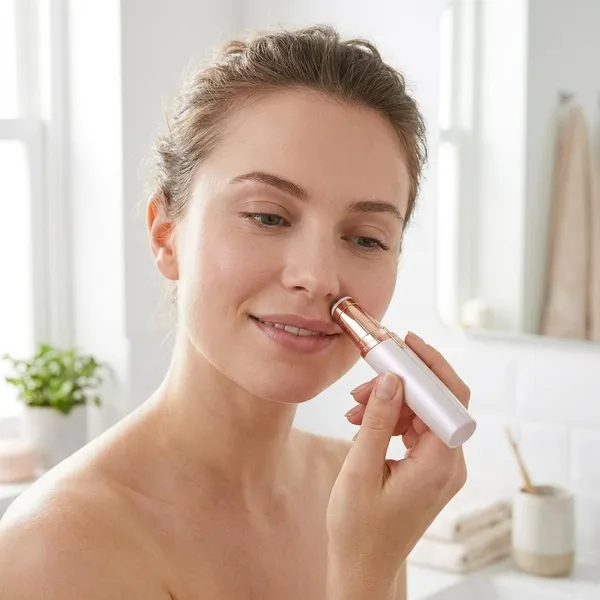
A photoepilator can reduce hair growth at home, but it is not a one-session fix and it is not suitable for every skin tone, hair color, or body area. The first things to check are simple: whether your hair has enough pigment, whether your skin tone is allowed by the device, and whether you can follow a regular treatment schedule.
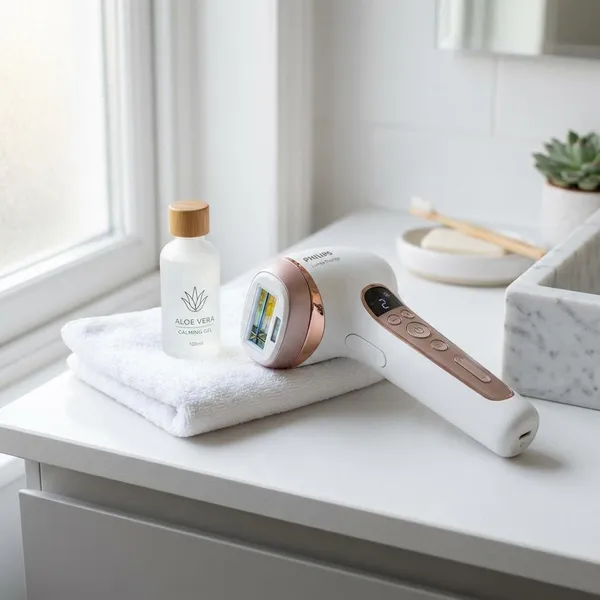
What Is a Photoepilator?
A photoepilator is a handheld light-based hair reduction device, usually using IPL, or intense pulsed light. Instead of cutting hair like a razor or pulling it out like wax, it sends flashes of light into the hair root area to slow future growth.
The important word is reduction. A photoepilator can make regrowth slower, finer, and patchier over time, but it should not be treated as guaranteed permanent hair removal. If you want perfectly smooth skin for a beach weekend next week, shaving or waxing gives faster results. If you want less routine maintenance over the next few months, IPL may make more sense.
Most home devices work best when the hair is noticeably darker than the surrounding skin. Dark brown or black hair on lighter to medium skin usually gives the device a clearer target. Very light blonde, gray, white, and red hair often respond poorly because there is not enough pigment for the light to absorb. Very dark skin tones may also be excluded on some devices because the light can be absorbed by skin pigment instead of the hair.
Before buying or using one, check these three things first:
- Skin tone chart: make sure your skin tone is within the device's allowed range.
- Hair color chart: confirm that your hair color is likely to respond.
- Body area limits: check whether the device is approved for the face, bikini line, or other sensitive areas you plan to treat.
How Photoepilation Works
Photoepilation works by using light and heat, not by physically removing the hair. That is why the routine feels different from shaving, waxing, or using a mechanical epilator. You are not trying to pull out the current hair; you are trying to affect the follicle so future growth becomes weaker.
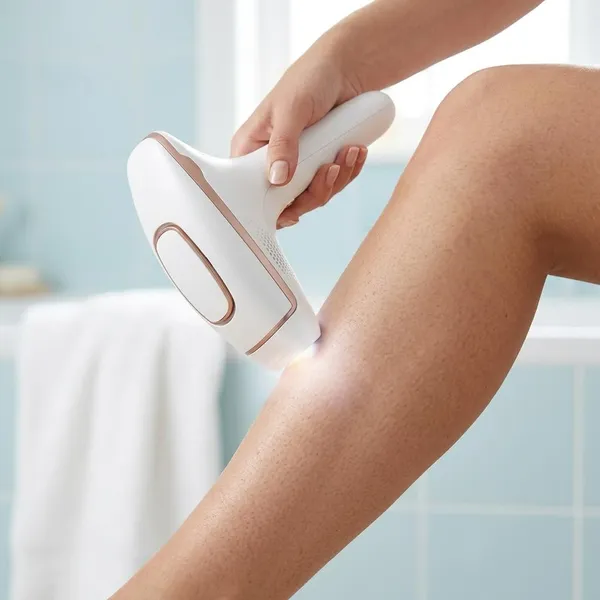
Light targets hair pigment
The flash from a photoepilator is absorbed mainly by melanin, the pigment that gives hair its color. This is why darker hair tends to respond better than pale or gray hair.
Think of it as a contrast-based treatment. If the device cannot "see" the hair well because the hair is too light, results may be disappointing even if you use it exactly as directed. If the skin itself is too dark for the device, the safety issue becomes more important than the result.
Heat affects hair follicles
Once the light is absorbed by the hair pigment, it turns into heat. That heat travels down toward the follicle and can reduce its ability to produce strong regrowth. Home IPL devices usually use lower energy than professional clinic systems, so patience matters.
Repeat sessions target new growth
One session is not enough because hair grows in cycles. Some hairs are in an active growth phase and can respond to light; others are resting and may not be affected yet.
- Starter phase: follow the brand's timing, often weekly or every other week.
- Progress check: look for slower, finer, or patchier regrowth rather than instant smoothness.
- Maintenance phase: continue occasional sessions only when the instructions say it is appropriate.
Photoepilators vs Lasers vs Epilators
These tools are often compared because they all deal with unwanted hair, but they do not solve the same problem in the same way. A photoepilator is usually the home-friendly middle ground: less immediate than pulling hair out, less targeted than a professional laser, but convenient for regular use.
| Option | How it works | Best fit | Main trade-off |
|---|---|---|---|
| Photoepilator / IPL | Uses broad light pulses to reduce regrowth | At-home users who can follow a routine | Gradual results and skin/hair compatibility limits |
| Laser | Uses more focused light energy | People wanting professional treatment and stronger targeting | Higher cost and appointment schedule |
| Epilator | Pulls hair from the root mechanically | People wanting immediate smoothness without light treatment | More discomfort and no long-term follicle reduction |
IPL devices use broad-spectrum light
IPL devices use a range of light wavelengths rather than one narrow beam. For home users, this broad-light approach can make larger areas such as legs or arms easier to treat, especially when the device has a glide mode.
The trade-off is that IPL is less targeted than many professional laser treatments. It can still be useful, but it usually asks more from the user: repeated sessions, correct preparation, and realistic expectations.
Lasers use focused light
Laser treatment uses a more focused beam aimed at the hair follicle. In a clinic, this can mean stronger treatment and more precise settings, especially when handled by trained staff.
Laser may be the better route if you want professional oversight, have a tricky area to treat, or do not want to manage the routine yourself. For someone treating large areas on a budget, a home photoepilator may feel more practical, even if it takes longer.
Epilators pull hair from the root
An epilator is not a light device. It grips and pulls hairs from the root, so the skin can feel smooth straight away, much like waxing.
This makes it useful for people whose hair color is not suitable for IPL. The downside is comfort and repetition: the hair grows back, and the pulling sensation can be too much for sensitive areas. If your main goal is less regrowth over time, a photoepilator and an epilator are not interchangeable.
How to Use a Photoepilator Safely
Safe use starts before the first flash. The biggest avoidable problems usually come from using the wrong setting, treating unsuitable skin, skipping the patch test, or flashing over areas with dense pigment such as tattoos.
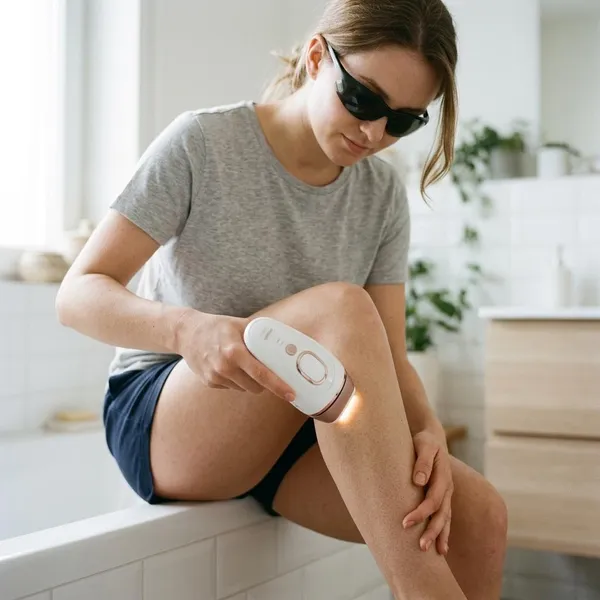
If you are a low-risk user with compatible skin and dark hair, the routine may be straightforward. If you have recent tanning, very sensitive skin, many dark moles, tattoos near the treatment area, or a medical skin condition, be more cautious and follow the device instructions closely. When a manual excludes a skin tone, body area, or condition, do not treat it as a casual suggestion.
Patch test as directed
Do the patch test before treating a full area, even if your skin usually tolerates hair removal well. Test a small spot at the recommended setting, then wait for the period stated by the brand, often around a day, to see whether redness, stinging, or unusual sensitivity appears.
This step is especially useful if you are treating a new area for the first time. Skin on the lower leg may tolerate a setting that feels too sharp on the bikini line or underarm.
Prepare clean, dry skin
Start with shaved, clean, dry skin. Avoid lotion, oil, deodorant, self-tanner, perfume, or makeup on the area because residue can make treatment less comfortable or interfere with skin contact.
- Shave instead of wax: IPL needs the hair root area to remain in place.
- Wait on irritated skin: skip cuts, rashes, sunburn, or recently inflamed areas.
- Be careful with tanning: recently tanned skin may absorb more light and react badly.
Follow the settings and pulse instructions
Use the setting recommended for your skin tone and body area, not the strongest setting you can tolerate. More intensity is not automatically better, especially on sensitive skin.
Stamp mode is usually easier for small or curved areas such as underarms. Glide mode can make larger areas quicker, but move steadily so you do not keep flashing the same patch of skin. A practical rule is to work in small sections and overlap only as much as the manual allows, rather than randomly moving the device around.
Avoid flashing over tattoos, very dark moles, or heavily pigmented marks unless your device instructions clearly say otherwise. Dark pigment can absorb the light strongly, which may cause pain or skin damage.
Follow the aftercare instructions
After treatment, keep the skin calm. If the area feels warm or slightly pink, use only gentle products that your skin already tolerates, and avoid hot baths, strong exfoliants, fragranced products, and heavy sun exposure for a short recovery window.
For year-round users, aftercare matters most in summer because sun exposure and tanning can change how safe the next session is. If you only treat in winter, the routine may be easier to control, but sunscreen is still sensible on exposed treated areas.
Conclusion
A photoepilator is worth considering if your skin tone and hair color are compatible and you are willing to use it consistently rather than expecting instant removal. Choose it for gradual at-home reduction, choose laser if you want professional targeting, and choose a mechanical epilator if immediate smoothness matters more than long-term regrowth control.