If you are wondering does IPL hair removal work, the practical answer is: yes, it can reduce regrowth for the right hair and skin combination, but it is not a one-session fix or a guarantee that every hair disappears forever. The first things to check are your hair color, your skin tone against the device chart, and whether you can stick with the starting treatment schedule.

What results can IPL hair removal deliver?
IPL is best understood as long-term hair reduction. It uses light energy to target pigment in the hair, which can weaken follicles over repeated sessions. For many people, the result is not instant bare skin, but slower, softer, less obvious regrowth.
If your goal is to stop shaving forever, IPL may feel disappointing. If your goal is to shave less often, deal with less stubble, and keep treated areas smoother for longer, the results can be genuinely useful.
Slower regrowth and less frequent shaving
The first useful sign is often a change in your shaving routine. Someone who normally shaves their lower legs every two days may start noticing they can wait several more days before the hair feels obvious again. That kind of change matters, even if the area is not completely hair-free.
This is where IPL tends to fit everyday life best: fewer rushed shaves before wearing shorts, less visible stubble between routines, and less time spent maintaining the same area over and over.
Fewer visible hairs over repeated sessions
Visible thinning usually builds gradually. Some hairs may stop showing as strongly, while others come back finer or with more space between them.
- Early change: patchy regrowth or small bare-looking spots.
- Mid-course change: softer stubble and less dense coverage.
- Better long-term sign: the same area stays smoother with less frequent shaving.
Patchiness is not always a bad sign. It can mean some follicles are responding while others still need to be treated during a better growth phase.
Lasting reduction rather than guaranteed removal
IPL should not be judged like permanent removal of every follicle. A realistic win is lasting reduction: less hair, slower return, and easier maintenance. Touch-ups are normal because follicles can recover, new growth can appear, and different body areas respond at different speeds.
For a summer-only routine, that may mean starting early enough that regrowth is reduced before you care about bare legs or underarms. For year-round smoothness, it usually means accepting occasional maintenance instead of expecting one finished course to do all the work forever.
Who is most likely to get results from IPL?
The best candidate is not simply the person with the most expensive device. IPL works best when there is enough pigment in the hair for the light to target, while the skin tone is within the device's safe range. If either part is a poor match, results can be weak or the treatment may not be suitable.
People with dark, pigmented hair
Dark brown or black hair usually responds best because it contains more melanin. Coarse dark hair on the legs, underarms, or bikini line often gives clearer feedback than very fine or pale hair because the device has a stronger target.
Blonde, gray, white, and many red hairs are much harder for IPL to affect. Turning the setting up is not a reliable workaround if the hair itself has too little pigment, and it may only make irritation more likely.
People within the device's supported skin-tone range
The skin-tone chart is a safety check, not a marketing detail. IPL is attracted to pigment, so skin with more melanin may absorb more light energy than intended if the device is not designed for that tone range.
Before buying or using a device, compare both your skin tone and hair color with the manufacturer's chart. If you tan easily or your skin tone changes noticeably in summer, check again before treating; recently tanned skin can change the risk picture.
People who follow the full treatment schedule
Consistency is where many home IPL routines succeed or fail. Hair grows in cycles, so a few random sessions rarely give a fair result. The device plan matters because repeated sessions increase the chance of treating hairs when they are more responsive.
- Choose one routine you can actually keep.
- Shave before treatment unless your device instructions say otherwise.
- Work in rows or small sections so you do not miss patches.
- Stop chasing faster results with unsafe settings.
How can you tell if IPL is working?
Do not judge IPL by what happens the next morning. The better test is whether the same area behaves differently over several weeks: slower return, less dense coverage, and fewer moments when you feel you need to shave.
Compare regrowth between sessions
Pick one area and compare it under similar conditions. For example, look at your lower leg the same number of days after shaving, in similar lighting, rather than checking randomly every day. That gives you a much fairer view of whether regrowth is slowing.
Look for thinner coverage over time
Thinner coverage can show up before dramatic clearing. You may notice less shadow after shaving, softer stubble, or more space between hairs. These small changes are still meaningful because they show the treated area is becoming easier to manage.
Track how often you need to shave
Shaving frequency is one of the simplest measurements because it connects directly to your daily routine. If you used to shave three times a week and now feel comfortable shaving once a week, IPL is doing something useful even if some hair remains.
- Write down treatment dates.
- Note when you next feel the need to shave.
- Compare the same body area, not legs one week and face the next.
Why might IPL results fall short?
When IPL disappoints, the cause is often one of four things: the hair does not have enough pigment, the skin or setting is not suitable, the treatment course was not completed, or hormones are driving new growth. Checking those points is more useful than assuming the device is automatically useless.
Hair has too little pigment
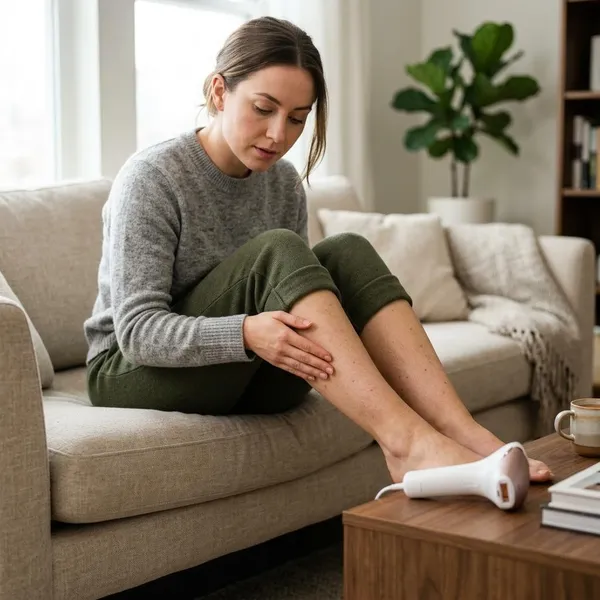
Low-pigment hair is a hard limit for IPL. If the hair is very light, gray, white, or some shades of red, there may not be enough melanin for the light to target effectively. In that situation, doing more sessions may not solve the problem.
Sessions miss areas or use unsuitable settings
Missed patches create uneven results because untreated follicles simply keep growing as usual. Rushing large areas is one of the easiest ways to think IPL "doesn't work" when the real issue is coverage.
Settings matter too, but higher is not always better. A setting that irritates your skin can force breaks, and those breaks may slow progress more than a safer, consistent setting would have.
The initial treatment course is incomplete
Stopping after a few sessions is a common reason results look weak. The early stage is usually when you are building the result, not proving the final result. If you quit as soon as progress feels slow, many follicles may never get treated at the right point in the growth cycle.
- Give one body area a fair trial before judging the whole device.
- Follow the brand's starting schedule instead of guessing.
- Do not stop the moment you see early thinning if the course is not finished.
Hormonal changes drive new growth
Facial areas such as the chin and upper lip can be more stubborn because hormones often influence growth there. Someone treating a few dark hairs on the lower leg may get steadier progress than someone trying to manage hormonally driven chin hair.
If new growth is sudden, heavy, or linked with symptoms such as irregular cycles or other health changes, it is sensible to speak with a qualified clinician. IPL may still reduce some hair, but it cannot fix an underlying hormonal trigger.
Conclusion
IPL is worth considering when your hair is dark enough, your skin tone fits the device range, and you are willing to treat consistently rather than expect instant clearing. It is less convincing for very light hair, unsuitable skin-tone matches, or situations where hormonal growth keeps creating new hair. The most practical way to judge success is not whether every hair is gone, but whether shaving becomes less frequent and regrowth becomes easier to live with.