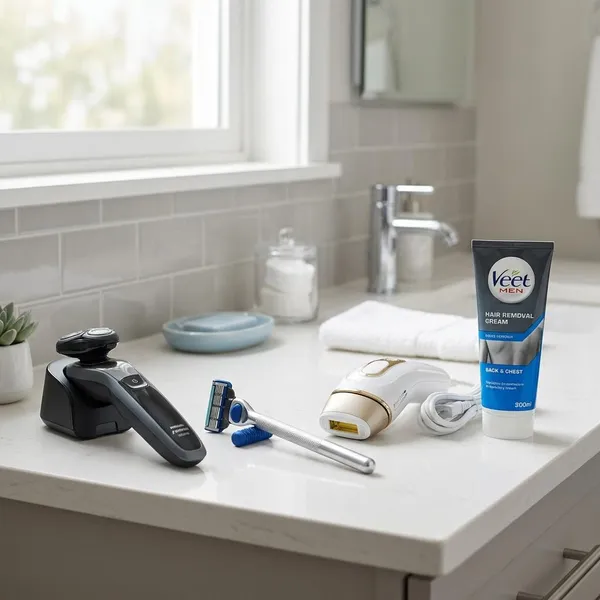
The best facial hair remover is usually the gentlest method that still handles the hair you actually have. For peach fuzz or sensitive skin, start with an electric remover or facial razor; for stubborn chin or upper-lip hairs, tweezing, threading, waxing, IPL, or electrolysis may make more sense depending on how long you want results to last.

Best Facial Hair Remover for Sensitive Skin
If your skin gets red, bumpy, or tight after hair removal, choose the method that creates the least friction, pulling, heat, or chemical contact. A shorter-lasting result is often worth it if your face looks calm afterward.
Electric removers avoid pulling hair
Electric facial removers are a good first choice for reactive skin because they usually trim hair at the surface instead of pulling it from the root. That makes them useful for quick upper-lip, chin, jawline, or sideburn touch-ups when you want low discomfort and little downtime.
They are especially practical for temporary use: before work, travel, photos, or makeup. The trade-off is upkeep. Hair may show again within a few days, but many people prefer a fast repeatable trim over waxing that leaves visible redness.
- Use on clean, dry skin unless the device says it is safe for wet use.
- Clean the head after each use so it does not drag oil or dead skin across your face.
- Replace dull heads when they start pulling or require repeated passes.
Facial razors offer gentle surface removal
Facial razors work well for peach fuzz on the cheeks, upper lip, and jawline. They remove surface hair quickly and can leave makeup sitting more smoothly, but the key is light pressure rather than aggressive scraping.
Use short strokes with a clean blade and stop once the area looks clear. Going over the same patch again and again is the common mistake that turns a simple shave into irritation. If you have active acne, eczema, rosacea, or a damaged skin barrier, an electric remover is usually the safer low-friction choice until your skin calms down.
IPL with cooling can improve treatment comfort
IPL may suit people who want gradual reduction rather than same-day grooming, especially if the device has a cooling feature. Cooling can make facial sessions feel less hot, but it does not remove the need for careful use.
| IPL is more likely to suit you if | Be more cautious if |
|---|---|
| You have darker facial hair and a compatible skin tone for the device. | Your hair is blonde, red, gray, or white, because IPL often works poorly on low-pigment hair. |
| You can follow a repeated schedule and wait for gradual changes. | You need hair gone today for an event or makeup application. |
| The device is clearly approved for facial use. | You have melasma, very reactive skin, or are using strong exfoliating actives. |
Never use IPL close to the eyes, on irritated skin, or over areas the device instructions exclude. For hormonal facial hair, results can be slower and maintenance may still be needed.
Patch-tested methods help limit irritation
Patch testing matters most when the method involves chemicals, heat, wax, or light. Test a small discreet area near where you plan to treat, wait at least 24 hours unless the product gives different instructions, and look for itching, burning, bumps, swelling, or delayed redness.
For a high-risk situation, such as trying facial wax before a wedding or using a depilatory cream for the first time, do not test it the same day you need smooth skin. Give your face enough time to show a reaction before using the method on a visible area.

How to Choose a Facial Hair Remover
Choose by priority: first match the method to your hair type, then check whether your skin can tolerate it, then decide how much pain, upkeep, and cost you are willing to accept. One tool does not have to solve every facial-hair problem.
Choose by hair type
Fine peach fuzz usually responds best to facial razors or electric removers because you can cover broader areas without pulling every hair from the root. Coarser hairs on the chin or upper lip often need a more targeted method, such as tweezers, threading, waxing, or electrolysis.
If you have both peach fuzz and a few stubborn chin hairs, use two methods rather than forcing one tool to do everything. A razor for the cheeks plus tweezers or professional treatment for isolated coarse hairs is often more practical than waxing the whole area.
Choose by skin sensitivity
Your skin reaction should overrule the marketing claim. If waxing gives you bumps for three days, it is not the best choice for your routine even if it removes hair well.
- Lowest irritation for many people: electric removers and careful facial razors.
- More redness risk: waxing, threading, epilators, and strong depilatory creams.
- Extra caution needed: active acne, rosacea, eczema, broken skin, recent exfoliation, or retinoid sensitivity.
Choose by pain tolerance
If you hate sharp pulling, stay with shaving, electric trimming, or a carefully patch-tested facial cream. These methods do not remove hair from the root, so they usually feel easier during use.
If you can tolerate discomfort for longer smoothness, waxing, threading, and epilating may be worth considering. Tweezing is fine for a few coarse hairs, but it becomes frustrating when you try to clear a whole upper lip or jawline one hair at a time.
Choose by result length
For a same-day fix, surface methods are the simplest choice. For fewer sessions, root-removal or professional options last longer but usually ask more from your skin, budget, or patience.
| Goal | Better match | What to expect |
|---|---|---|
| Quick smoothness before makeup or an event | Facial razor or electric remover | Fast, low pain, shorter-lasting. |
| Longer gaps between touch-ups | Waxing, threading, tweezing, or epilator | More discomfort, often more redness. |
| Less regrowth over time | IPL, laser, or electrolysis | Requires repeated sessions and careful suitability checks. |
Choose by upkeep and budget
Budget is not only the first purchase. Count replacement blades, device heads, wax strips, salon appointments, treatment sessions, and the time you spend maintaining results.
For occasional touch-ups, a low-cost razor or electric remover is usually enough. For year-round facial-hair management, especially if the same coarse hairs keep returning, a higher upfront option like electrolysis may be better value over time. Do not jump to the most expensive method until you know your skin tolerates simpler options.
Does Facial Hair Grow Back Thicker?
No, shaving or trimming facial hair does not make it grow back thicker. It only cuts the hair at the surface, so the blunt edge can feel stubbly as it comes through.
The follicle controls hair thickness, color, and growth pattern. If facial hair becomes more visible over time, the more likely causes are hormones, genetics, age, or a medical factor rather than the remover you used.
Pay attention to sudden changes. New coarse chin or jawline hair can happen with normal hormonal shifts, but if it appears quickly alongside acne, irregular periods, or unexplained weight changes, it is worth speaking with a healthcare professional.
The better question is not whether shaving changes your hair. It is whether the method leaves your skin comfortable enough to repeat. For many people, surface removal wins because it is predictable, inexpensive, and easy to stop if the skin feels irritated.

Conclusion
Start with the least irritating method that solves your actual problem: an electric remover or facial razor for peach fuzz and quick touch-ups, a root-removal method for longer smoothness, and IPL or electrolysis only when you are ready for a longer-term plan. If your face reacts easily, test small, avoid last-minute experiments, and let calm skin matter more than the longest possible result.