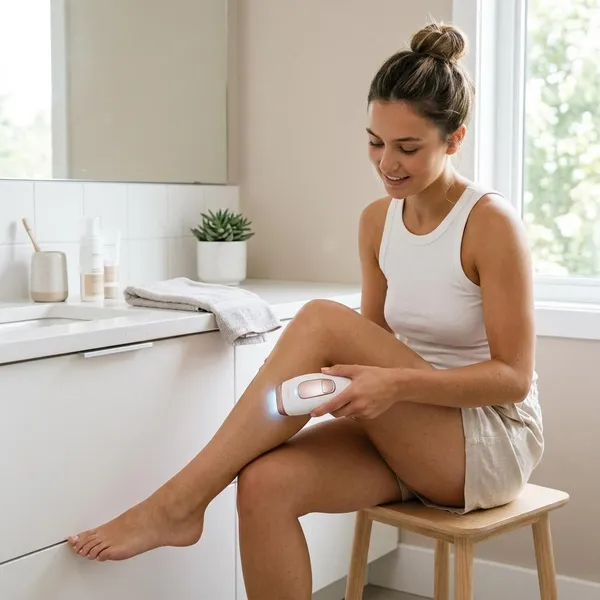
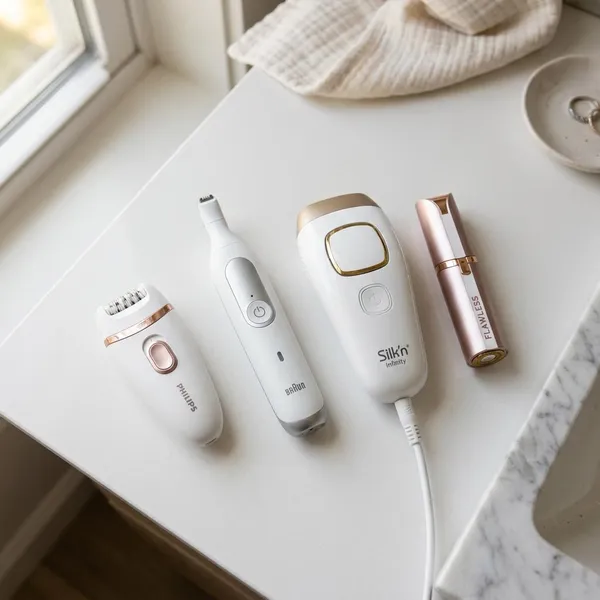
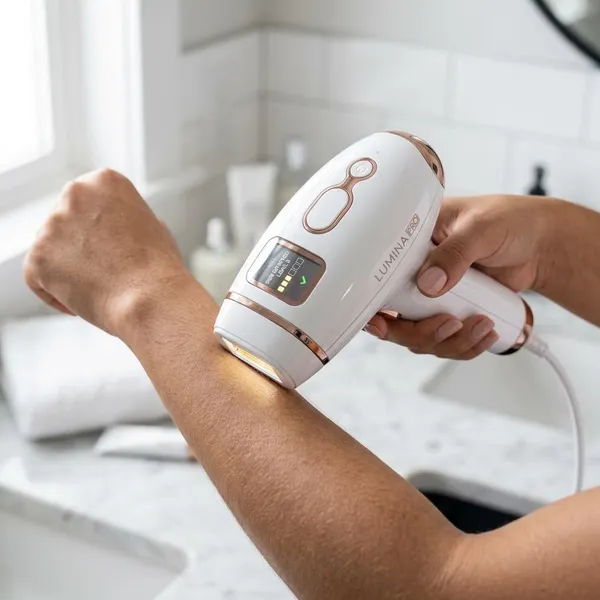
If you are considering a laser hair removal kit, the first thing to check is not the price or the number of flashes, but whether the device actually suits your skin tone, hair color, and treatment area. Home devices can reduce regrowth over time, but they are not a quick one-session fix and many kits sold as "laser" are actually IPL.
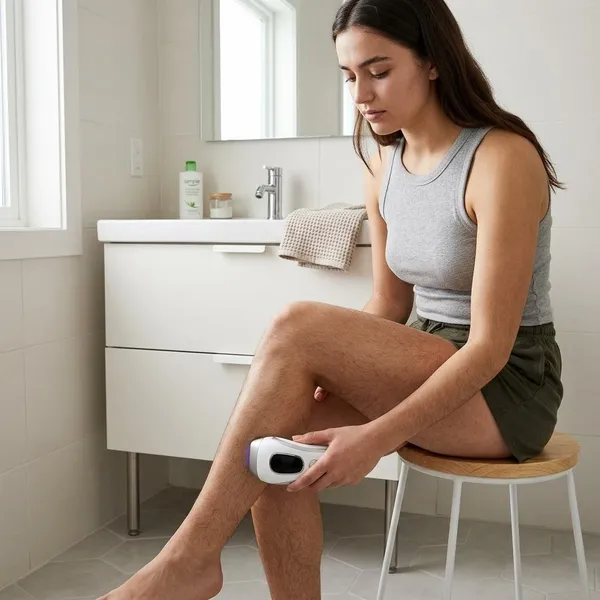
Laser vs IPL Hair Removal Kits
Home hair removal kits usually fall into two groups: true laser devices and IPL devices. Both use light to target pigment in the hair, but they do not deliver that light in the same way. That difference affects precision, speed, comfort, and who is likely to get a useful result.
Laser uses focused light
A laser device uses a more focused beam of light, usually aimed at a specific wavelength range. In plain terms, it is designed to target the pigment in the hair follicle more directly instead of spreading light across a wider area.
That can be useful on smaller zones where accuracy matters, such as the upper lip, underarms, or bikini line. Home laser devices are still lower-powered than clinic machines, so the trade-off is usually slower progress rather than instant professional-style results.
IPL uses broad light pulses
IPL stands for intense pulsed light. Instead of one focused beam, it sends out broader pulses of light across a wider spectrum.
This is why many at-home devices are IPL rather than true laser: they are often easier to use over larger areas and are widely available. If your main goal is treating legs or arms without spending all evening on it, IPL may feel more practical even if it is less targeted.
Laser targets a narrower wavelength range
The narrower wavelength range is the main reason laser is often described as more precise. It may work better when there is clear contrast between the hair and the surrounding skin, such as darker hair on lighter skin.
That same point also explains one common disappointment. Very light blonde, gray, white, or red hair often does not contain enough pigment for light-based devices to target well. Before buying, compare your actual hair color against the brand's suitability chart, not just the product photos.
IPL can cover larger areas quickly
IPL devices often have a larger treatment window, so each flash can cover more skin. For someone who wants to treat both lower legs every week, that speed can matter more than small differences in technology.
| Best fit | Why it matters |
|---|---|
| Smaller, detailed areas | A laser-style device may feel more controlled. |
| Larger areas like legs or arms | IPL may be faster and easier to keep up with. |
| Unsure skin or hair match | The compatibility chart matters more than the device name. |
Do Laser Hair Removal Kits Work?
Yes, home hair removal kits can work, but the realistic goal is long-term reduction, not guaranteed permanent removal. The best results usually happen when the device matches your skin and hair type and you follow the schedule consistently.
Results build over repeated sessions
Hair grows in cycles, and a device cannot affect every follicle in one session. That is why most brands ask you to treat weekly or every two weeks at first, then switch to less frequent maintenance later.
Hair regrowth may become slower and finer
For many people, the most noticeable benefit is less daily maintenance. Someone who shaves their underarms every morning may find they can go longer between shaves, while someone treating legs for summer may care more about reducing visible stubble between touch-ups.
That kind of result can still be worthwhile even if some hair remains. It changes the routine rather than removing the routine completely.
Maintenance may still be needed
Maintenance is normal with home devices. Some follicles may recover, and new growth can appear later, especially in areas affected by hormones such as the chin, upper lip, or lower abdomen.
- Occasional body hair reduction: home maintenance may be enough.
- Hormonal facial growth: expect less predictable results and consider professional advice.
- Expecting permanent smoothness: a home kit is likely to disappoint.
Results vary by device and user
Two people can use the same kit and get different results. Device strength, treatment window size, skin-tone sensors, hair thickness, hair color, and consistency all affect the outcome.
The safest buying order is simple: check your skin tone, check your hair color, check the approved body areas, then compare convenience features. A powerful-looking device is not helpful if you avoid using it because sessions take too long or the settings feel confusing.
How to Use a Hair Removal Kit Safely
Safe use starts before the first flash. Most problems come from skipping the compatibility chart, treating irritated or tanned skin, using too high a setting, or using the device on areas the brand excludes.
Check skin and hair compatibility
Check the brand's skin-tone and hair-color chart before you buy, then check it again before use if your skin has recently tanned. Light-based devices need enough contrast between hair and skin to work safely and effectively.
If your skin tone is outside the approved range, your hair is very light, or you have a history of pigmentation changes, do not try to "test your luck" on a high setting. That is the kind of situation where professional guidance is the more sensible first step.
Prepare the treatment area
Most home devices are used on shaved skin, not waxed or plucked skin. Shaving leaves the follicle under the skin so the light still has a target, while waxing or plucking removes the hair from the root.
- Shave first: avoid treating long surface hair.
- Use clean, dry skin: remove lotion, oil, deodorant, and fake tan.
- Wait if skin is irritated: sunburn, rash, or over-exfoliation is a reason to pause.
Patch test before full use
A patch test is a small but important step, especially if you are new to light-based hair removal. Treat a discreet spot at the recommended starting level and wait the amount of time stated in the manual.
Mild warmth or slight redness can happen. Blistering, strong burning, unusual swelling, or changes in skin color are warning signs to stop and seek professional advice before trying again.
Use the recommended setting
The highest setting is not automatically the best setting. If it irritates your skin, you may end up skipping sessions, which works against the consistency these devices need.
If your device has an automatic sensor, let it guide you. If it has manual levels, start conservatively and only increase when the instructions allow it and your skin has stayed calm after previous use.
Follow the treatment schedule
Use the schedule from the brand rather than guessing. Random sessions every now and then make it harder to catch hairs during the right growth phase and harder to judge whether the kit is working.
Avoid restricted areas
Do not use a home device near the eyes, on tattoos, over dark moles, on broken skin, or on any area the manual excludes. Some devices allow use on the bikini line or limited facial areas, but that does not mean they are safe for every nearby area.
If the instructions are unclear about a sensitive zone, treat that as a no. Guessing is not worth the risk of burns, irritation, or pigment changes.
Is a Laser Hair Removal Kit Worth It?
A home kit is worth considering if you want gradual reduction, have compatible skin and hair, and are willing to keep up with repeated sessions. It is less convincing if you need fast results, have unsuitable hair color, or need careful treatment for a higher-risk skin or medical situation.
Worth it for regular at-home use
The strongest reason to buy one is convenience. If you already shave or wax often, being able to treat at home without booking appointments can make the routine easier to stick with.
It may also make financial sense over time, but only if you actually use it. A kit that sits in a drawer after two sessions is more expensive than it looks.
Worth it for long-term hair reduction
A home device makes the most sense when your goal is "less hair and slower regrowth," not "never think about hair removal again." That expectation is much closer to how these kits perform in real life.
For someone with coarse dark leg hair, even partial reduction can mean fewer shaving days and less stubble. For someone with already fine, pale hair, the improvement may be too small to justify the effort.
Less useful for unsuitable hair colors
Blonde, red, gray, white, and very fine hair often respond poorly because the device has less pigment to target. This is not usually solved by buying a more expensive model.
Less suitable when professional care is needed
Professional treatment may be the better option if you have darker skin that needs more specialized settings, a history of skin reactions, hormonally influenced facial hair, or a treatment area that feels difficult to judge safely at home.
- Choose home use if your case is straightforward and convenience matters most.
- Consider a clinic if safety, customization, or faster progress matters more.
- Do not buy yet if your skin or hair type falls outside the approved range.
Conclusion
A home hair removal kit can be a good buy when your skin and hair are compatible, your expectations are realistic, and you are prepared to follow a routine rather than chase instant smoothness. Check suitability first, choose the technology that fits your treatment area, and be cautious with sensitive or higher-risk situations; if those boxes do not line up, professional care is the smarter place to start.