IPL chest treatment is usually considered when the upper chest has visible sun spots, freckles, blotchy brown pigment, or persistent redness from years of sun exposure. It can be a good option when the main problem is color, not loose skin or deep lines, but your skin tone, recent tanning, and sensitivity all matter before booking.
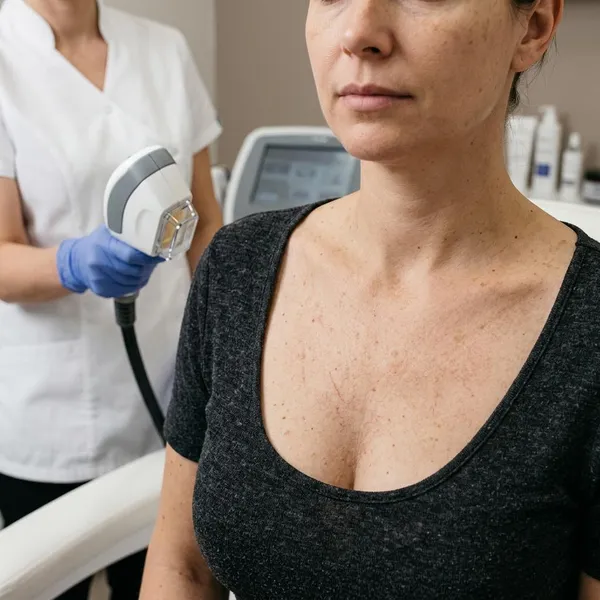
What does IPL on the chest treat?
IPL works best on chest concerns that are based on visible color: brown pigment, scattered freckles, redness, and small surface vessels. It is less useful if your main concern is crepey texture, deep wrinkles, sagging, or raised spots that need medical assessment.
Sun spots and freckles
Flat sun spots and freckles are some of the most common reasons people choose IPL for the chest. The light is attracted to excess pigment, so small brown marks may darken first and then shed gradually instead of disappearing during the appointment.
This is especially noticeable after summer, when the chest has been exposed through swimwear, V-neck shirts, or outdoor exercise clothing. If the pigment is fresh and light, improvement may show sooner; older, denser sun spots often need a series of treatments.
Uneven brown pigmentation
Uneven brown pigmentation is different from having a few individual freckles. It often looks like a mottled or patchy cast across the décolletage, which can make the chest look more sun-damaged than the face.
- Best fit: broad, flat brown unevenness caused by sun exposure.
- More cautious: pigment that appeared after irritation, hormones, or recent tanning.
- Not ideal to guess at: new or unusual spots that have not been assessed.
Redness and visible blood vessels
IPL can also target the red color in small superficial blood vessels. That makes it useful for mild chest redness, tiny broken capillaries, or a pink cast that sits alongside sun damage.
The main limit is depth. Surface redness may respond, while deeper vascular issues, active rashes, irritation, or unexplained flushing may need a different plan. If your chest is easily inflamed by heat, fragrance, or skincare products, mention that before treatment so the settings and timing can be adjusted carefully.
Patchy sun damage on the décolletage
The décolletage often shows mixed damage: freckles, brown patches, redness, and a general uneven tone all in the same area. IPL is popular here because one treatment plan can address more than one color problem at once.
How does IPL work on chest skin?
IPL uses pulses of broad-spectrum light rather than a single laser wavelength. The device settings are chosen so the light is absorbed more strongly by unwanted brown or red color than by the surrounding skin.
The chest can respond well, but it is not an area to treat aggressively. It often gets friction from clothing, direct sunlight, and heat buildup, so a safer treatment plan is usually better than trying to remove every mark in one session.
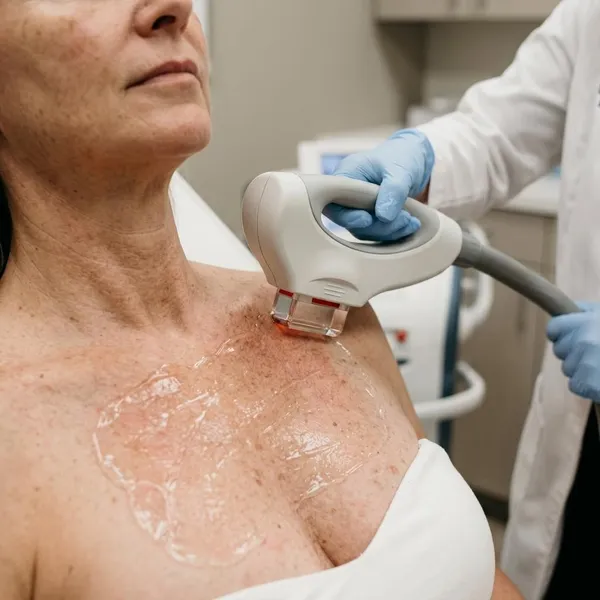
Light targets excess pigment
Brown spots contain concentrated melanin. When IPL light reaches those areas, the pigment absorbs the energy and heats up more than the nearby skin.
Light targets visible blood vessels
For redness, IPL targets hemoglobin inside superficial vessels. The goal is to heat those tiny vessels enough that they become less visible as the skin settles.
Redness usually improves more gradually than brown spots. You may not see dramatic change the next morning, but the chest can look calmer over the following weeks, especially when redness is spread across a larger area instead of sitting in one obvious vessel.
Heat breaks down the targeted color
The useful part of IPL is the controlled heat created inside the target color. The risk is the same thing: too much heat, the wrong settings, or treating recently tanned skin can raise the chance of irritation, burns, or unwanted pigment changes.
- Check recent sun first: do not treat freshly tanned or sunburned chest skin.
- Be honest about self-tanner: artificial color can interfere with light-based treatments.
- Ask about your skin tone: darker skin tones need extra caution because natural melanin can absorb more energy.
- Expect gradual clearing: the final look is not judged on treatment day.
What happens during an IPL chest treatment?
An IPL chest session is usually done in a clinic setting and often feels quicker than people expect. The important part is not just the pulses themselves, but the screening before treatment and the cooling and instructions afterward.
Before the appointment, the provider should review your skin tone, current products, medications, recent sun exposure, and whether the area has any irritation. If you arrive with a tan, sunburn, or active rash, postponing is often the safer choice.
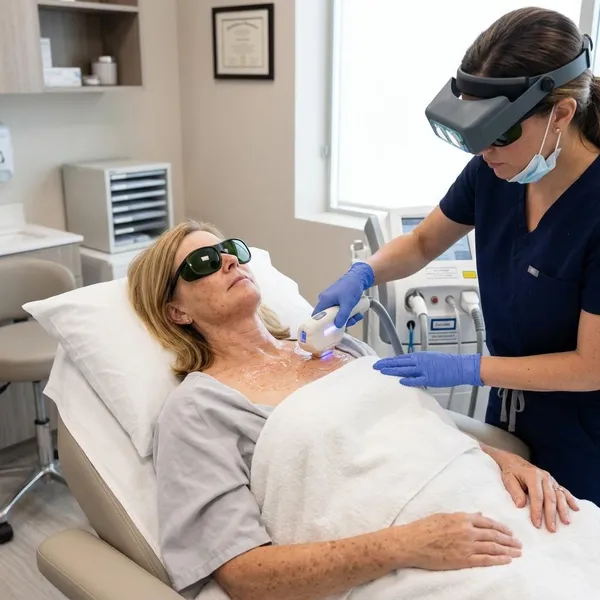
Skin is cleaned and prepared
The chest is cleaned so sunscreen, body lotion, sweat, fragrance, or makeup residue does not interfere with the treatment. A provider may also mark or avoid areas that should not be pulsed, such as irritated patches or spots that need separate evaluation.
If you use retinoids, exfoliating acids, or strong brightening products on the chest, ask when to pause them before treatment. Many people remember this rule for the face but forget that the décolletage can be just as reactive.
Eye protection is put on
Protective eyewear is used even though the treatment area is the chest. IPL flashes are bright, and reflected light still needs to be treated seriously.
Light pulses are applied across the chest
The provider moves the handpiece across the treatment area in a controlled pattern. Each pulse can feel like a quick warm snap against the skin, with some areas feeling sharper than others.
During this step, good technique matters more than speed. Dense pigment, redness, and thinner or more sensitive areas may not all need the same settings. A careful session should aim for visible improvement without leaving the chest feeling overly heated or raw.
Skin is cooled and soothed afterward
After the pulses, the skin is usually cooled with a compress, gel, or calming product. The chest may look pink and feel warm, similar to a mild sunburn, and brown spots may continue to darken over the next day or two.
Most people return to normal low-key activities right away, but it is smart to avoid extra heat for the first 24 to 48 hours. Hot showers, saunas, intense workouts, and tight scratchy clothing can make freshly treated chest skin feel more irritated.
How to care for your chest after IPL
Aftercare has a real effect on how comfortably the chest heals. The priorities are straightforward: keep the skin calm, do not force pigment to shed, and protect the area from UV exposure every day.
For a low-risk situation, such as mild freckles on fair skin treated in winter, recovery may feel very easy. For higher-risk timing, such as treatment close to a beach trip or during a sunny season when the chest is often uncovered, aftercare needs to be much stricter or the appointment may be better delayed.
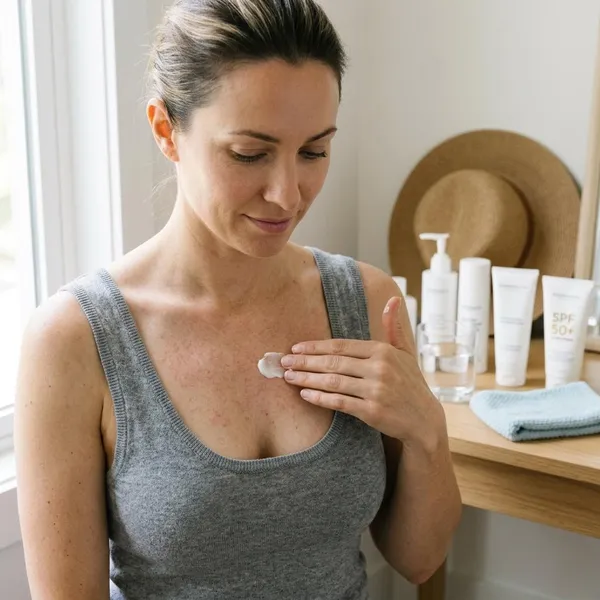
Keep skincare gentle
Use a mild cleanser and keep the routine plain while the chest feels warm, tight, or sensitive. Strong exfoliants, retinoids, scrubs, fragranced products, and aggressive brightening formulas can wait until the skin has clearly settled.
- Use: mild cleanser, simple moisturizer, sunscreen.
- Pause: scrubs, acids, retinoids, fragranced body products.
- Avoid: rough towels, loofahs, and tight fabric rubbing the area.
Moisturize if the skin feels dry
A light, fragrance-free moisturizer can help if the chest feels dry, tight, or itchy. You do not need to smother the area; the goal is comfort and barrier support, not peeling the pigment faster.
Avoid picking or scrubbing treated spots
Darkened spots can look like dirt or tiny crusts, but picking them off is one of the easiest ways to irritate the skin. Let them flake naturally, even if that takes several days.
This matters more on the chest than many people expect. A loofah in the shower, a scratchy sweater, or a sports bra rubbing the same area can act like unwanted exfoliation and may leave redness behind longer than necessary.
Use daily broad-spectrum sunscreen
Daily broad-spectrum sunscreen is the non-negotiable step after IPL on the chest. Many providers recommend SPF 30 or higher, with reapplication when the area is exposed, but clothing coverage is often even more reliable during healing.
Conclusion
IPL can be a sensible choice for chest sun spots, freckles, patchy pigmentation, and mild redness when the problem is flat visible color and your skin is a safe candidate for light-based treatment. The best results usually come from careful timing, conservative settings, and boring but consistent aftercare; if you are recently tanned, prone to pigment changes, or unsure about a spot, get assessed before treating the area cosmetically.