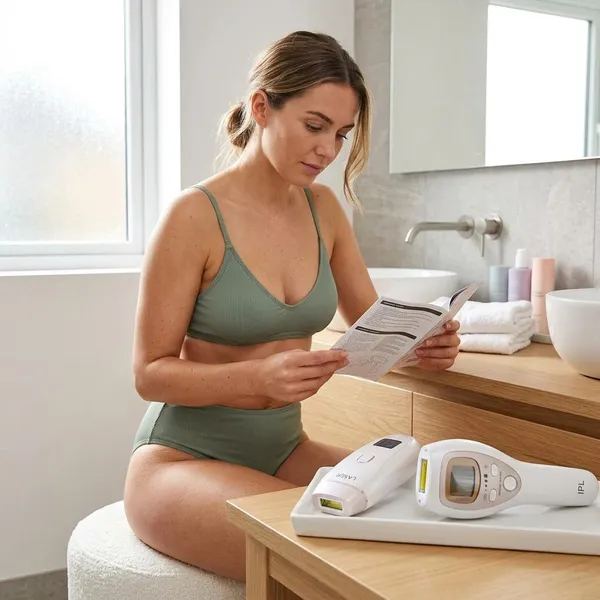
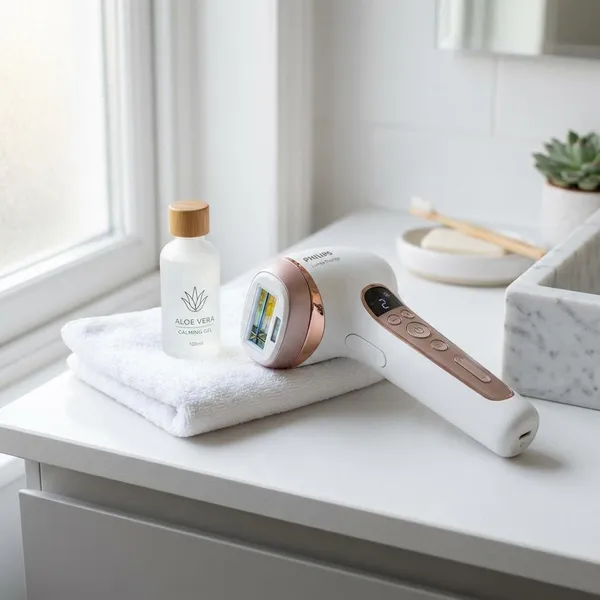
IPL hair removal on face can be safe for some people, but only when the device is approved for facial use, your skin and hair are a suitable match, and you avoid high-risk areas. The first checks are simple: confirm the manual allows the exact facial area, make sure the hair has enough pigment for IPL to target, and do not treat irritated, recently tanned, tattooed, or eye-adjacent skin.

Where should you avoid IPL on the face?
Facial IPL is not a "use anywhere there is hair" treatment. Most home devices, when they allow facial use, limit it to areas such as the upper lip, chin, jawline, or sideburn area. Some are stricter and only allow treatment below the cheekbones, so the device manual matters more than general advice online.
Eyelids, eyebrows, and areas near the eyes
Do not use home IPL on eyelids, eyebrows, or close to the eyes. The flash is too intense for that area, and a safety sensor does not make the eye socket a suitable treatment zone.
Eyebrows are especially risky because a tiny placement mistake can put the flash too close to the eye. If brow shaping or hair near the orbital area is your concern, that is a better reason to choose threading, tweezing, or professional advice instead of home IPL.
Lips and inside the nose
The skin above the upper lip may be allowed by some face-safe devices, but the lips themselves and the inside of the nose should be avoided. The treatment window should sit flat on normal outer skin, not on delicate tissue or inside an opening.
Tattoos, permanent makeup, and dark moles
Skip tattoos, permanent makeup, microbladed brows, lip blush, dark beauty marks, and dark or raised moles. IPL is attracted to pigment, so these areas can absorb too much light and react with burns, blistering, or color changes.
If a dark mole or pigmented mark sits near the treatment area, do not flash over it "just once." Work around it with a clear margin if your device allows that, or avoid the area and ask a dermatologist if you are unsure whether the mark needs checking.
Broken, sunburned, or inflamed skin
Postpone IPL if the skin is sunburned, broken, rashy, hot, recently irritated, or going through an active acne flare. Facial skin is visible and often more reactive, so pushing through a session on stressed skin can leave redness or dark marks that are much more annoying than a missed treatment.
This also applies if your routine includes retinoids, exfoliating acids, benzoyl peroxide, or prescription acne products. If the area stings with normal skincare, looks inflamed, or has just had strong sun exposure, wait until it feels calm and looks normal again.
What results can facial IPL deliver?
Facial IPL is best thought of as long-term hair reduction, not guaranteed permanent removal. It works by sending light into pigment in the hair root, so darker hair with clear contrast against the skin usually responds better than very light blonde, red, grey, white, or very fine hair.
The result also depends on why the hair is growing. A few coarse chin hairs on otherwise calm skin is a different situation from dense hormonal growth across the jawline. Both may improve, but the second case usually needs more patience and more maintenance.
Slower regrowth after repeated sessions
The most realistic early win is slower regrowth. IPL only affects hairs that are in a suitable growth phase, so one session will not catch everything. With repeated sessions, some hairs may come back finer, softer, or less quickly.
For someone who usually notices chin stubble the next day, even a longer gap between touch-ups can feel worthwhile. For someone with a few pale, soft upper-lip hairs, the change may be much less obvious because IPL has little pigment to target.
Less frequent hair removal over time
When IPL works well, the practical benefit is less frequent hair removal. That might mean shaving the upper lip less often, tweezing fewer chin hairs, or feeling less tempted to pick at the same area every morning.
- Daily grooming problem: IPL may reduce how often you need to manage visible regrowth.
- Irritation from waxing or threading: fewer removal sessions can mean less redness and fewer bumps.
- Occasional stray hairs: IPL may be useful, but a precise method may still be easier for just one or two hairs.
Ongoing upkeep for persistent or hormonal growth
Persistent or hormonal facial hair often needs upkeep. IPL can reduce thickness and slow regrowth, but hormones may continue to trigger new hairs or reactivate follicles over time.
This is common with PCOS-related growth, thyroid-related changes, or naturally stubborn jawline and chin hair. Maintenance does not automatically mean the treatment failed; it means your long-term plan should be based on easier management rather than expecting every follicle to stop forever.
How do you use facial IPL safely?
The safest order is compatibility first, skin condition second, technique third. Check that your device allows facial use on your exact area, confirm your skin tone and hair color are within the device's range, then prepare the skin and use the lowest appropriate controlled setting as directed.
A face-friendly device usually has a smaller window, facial attachment or facial mode, adjustable intensity, and clear instructions for areas such as the upper lip or chin. Speed is not the goal on the face; accurate placement matters more.
Test a small area as the manual directs
Patch test before treating a full facial area, even if you have used IPL on your body before. Choose a small spot, use the setting your manual recommends, and wait the stated time before continuing.
Look for more than normal mild warmth. Burning, swelling, unusual redness, blistering, or new darkening are reasons to stop rather than "turn it down and try again" on the same day.
Remove hair and cleanse as instructed
Shave the treatment area if your device tells you to remove hair first. Do not wax, thread, or pluck immediately before IPL because those methods remove the root that the light needs to target.
The skin should be clean, dry, and free of makeup, sunscreen, oil, perfume, heavy moisturizer, and active skincare. For a few coarse chin hairs, shaving may feel less precise than tweezing, but it gives IPL a better chance to work.
Use the approved facial setting or attachment
Use the facial attachment, facial mode, or approved intensity level if your device includes one. A large body window can be awkward around the upper lip and chin, and awkward placement is where mistakes happen.
- Upper lip: keep the flash on the skin above the lip, not on the lip line itself.
- Chin or jawline: treat in small sections so you do not overlap the same spot repeatedly.
- Sideburn area: stay within the zone your manual allows, especially near the cheekbone and eye area.
Follow the contact, eye-safety, and flashing instructions
Hold the treatment window flat against the skin and use controlled flashes rather than rushing. Many people find stamp mode easier than glide mode on small facial areas because it gives better placement control.
Do not look directly at the flash, and do not treat near the eyes just because the device only fires with skin contact. Another common error is heavy overlap: flashing the same small patch several times may increase irritation without improving results.
Stick to the treatment and aftercare schedule
Follow your device's schedule instead of doing extra sessions whenever you see regrowth. More flashing is not automatically better, and facial skin can become irritated if you keep chasing every new hair.
- Shave as directed; do not wax, thread, or pluck first.
- Cleanse and dry the area completely.
- Patch test when starting or changing settings.
- Use the facial mode or attachment with careful single flashes.
- After treatment, keep skincare bland and protect the area from sun.
For aftercare, skip scrubs, exfoliating acids, retinoids, strong fragrance, heat, and direct sun for a short period as your manual advises. Daily sunscreen is especially important on the face because fresh irritation plus UV exposure can raise the chance of lingering pigmentation.

Conclusion
Facial IPL is worth considering when the hair is dark enough, the skin is suitable, and the area is clearly approved by your device, but it is not a treatment to improvise around the eyes, lips, moles, tattoos, or irritated skin. If your facial hair is hormonal, very fine, or linked with pigmentation concerns, treat IPL as a management tool and get professional advice before pushing ahead.