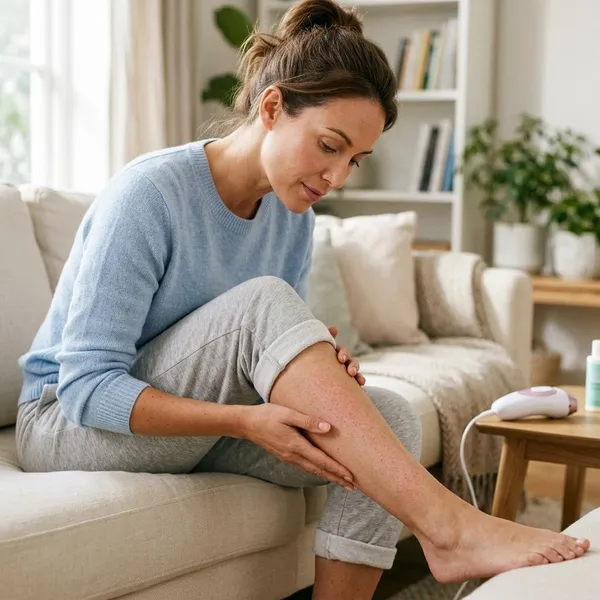
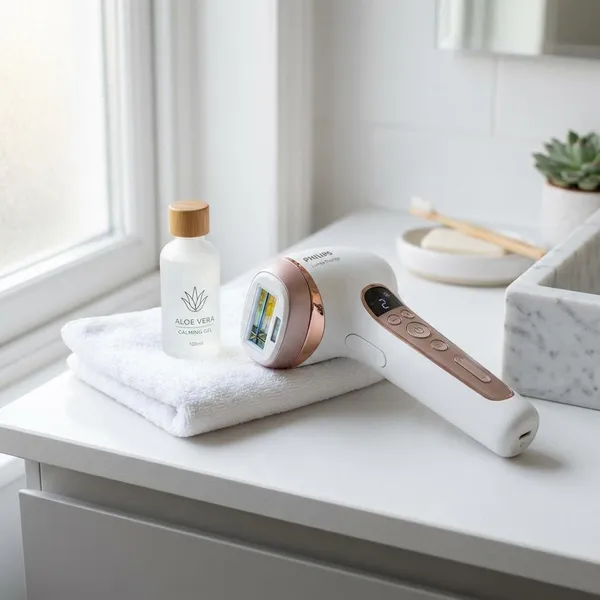
At home bikini laser hair removal can be worth trying if you only want to reduce visible regrowth along the outer bikini line and your skin tone, hair color, and device manual all match. The first thing to check is not the price or the brand, but whether the device is approved for your coloring and for the exact bikini area you want to treat. If you want a full Brazilian-style result or you have irritated skin, dark tattoos, certain medications, or very dark skin, it is safer to pause and get professional advice first.
Home Laser vs IPL
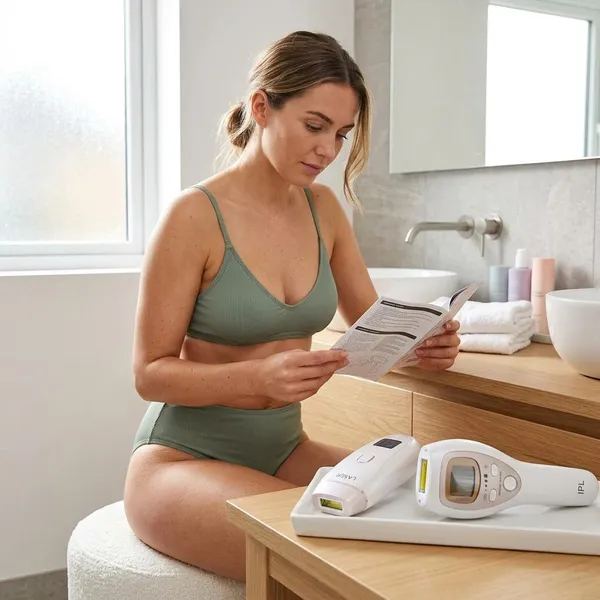
Home hair-removal devices are often marketed as "laser," but many are actually IPL. Both use light energy to target pigment in the hair, and both work gradually rather than removing every hair in one session. The difference matters more in the bikini area because the hair is usually coarse, the skin can be reactive, and precision is useful around narrow edges.
Laser uses a focused wavelength
A true laser device uses one focused wavelength, so the energy is more targeted than broad-spectrum light. For a small area like the bikini line, that can be useful when you want controlled placement rather than fast coverage.
At-home laser devices are still much lower powered than professional systems, so expect gradual thinning, not clinic-level clearance after a few uses. They may suit someone who is patient, comfortable working slowly, and mainly wants to tidy the outer line rather than cover a large area quickly.
IPL uses broad-spectrum light
IPL uses a wider range of light, which is why many home devices can treat skin faster than a small laser head. It is usually the more common home option and often comes with skin-tone sensors, intensity controls, or cooling features that make bikini-line use more manageable.
| Best fit | Why it matters for the bikini line |
|---|---|
| Small, precise cleanup | A focused laser-style device may feel easier to control along edges. |
| Regular maintenance at home | IPL is widely available and often easier to fit into a routine. |
| Sensitive but approved skin | Cooling and lower settings may help, but the manual still sets the limit. |
Is Bikini Hair Removal Right for You?
The best candidate has enough contrast between skin and hair, calm skin, and realistic expectations. If any of those three are missing, home treatment can become uncomfortable, ineffective, or risky.

Check your skin tone and hair color
Most home laser and IPL devices work best when the hair is darker than the surrounding skin. Dark blonde, brown, and black hair usually give the device more pigment to target, while blonde, red, gray, or white hair often responds poorly.
- Good starting point: your skin tone and hair color both sit clearly inside the device chart.
- Use extra caution: you are near the darkest approved skin tone or your bikini area is more pigmented than nearby skin.
- Usually not worth it: the hair is very light, red, gray, or white.
Do not rely on the product page alone. Compare your coloring with the manual's chart in good light, and be especially careful if the bikini area is darker than your legs or arms.
Check skin conditions and medications
Skip treatment on skin that is sunburned, freshly tanned, broken, inflamed, or irritated from shaving. Also check whether your medications or skincare products increase light sensitivity, especially retinoids, strong acids, some acne treatments, and certain antibiotics. If you have eczema, psoriasis, frequent infections, a history of keloids, or you are unsure about pregnancy-related use, ask a medical professional before treating the area.
Check the device's approved areas
"Bikini safe" does not automatically mean safe for every intimate area. Many manuals only approve the outer bikini line, not mucosal tissue, inner genital areas, or darker, more sensitive folds of skin.
This is where people often take the biggest risk. If your goal is simply fewer bumps where hair shows outside underwear or swimwear, staying on the outer line is usually enough. If your goal is a full Brazilian look, a home device may not be the right tool unless the manual clearly approves those zones and your skin is a suitable match.
Which Bikini Areas Can You Treat?
Start by drawing a mental border before you turn the device on. The safest home-use approach is to treat only the area the manual clearly names, then stop at that boundary even if the device still seems easy to position.
Bikini line within the device's limits
The outer bikini line is usually the most realistic treatment zone. Think of the hair that would show outside a standard swimsuit or underwear edge. This area is easier to see, easier to keep flat against the device window, and less risky than treating closer to genital tissue.
- Use good lighting so you can see the edge clearly.
- Work in small sections to avoid missed patches or repeated flashes.
- Use a precision head if your device includes one.
Other outer areas only if approved
Some devices may allow nearby outer areas, such as parts of the mons pubis, but approval varies by model. One brand's instructions should not be treated as permission for another device.
If you want more than a basic bikini-line cleanup, choose the device based on its manual, not just its marketing photos. A cautious first month is sensible: use the recommended starter setting, watch how the skin looks the next day, and expand only if the instructions and your skin response both support it.
Sensitive areas the manual excludes
Do not treat areas the manual excludes, even if the device can physically fit there. Inner genital areas, mucosal tissue, and highly pigmented intimate skin can react differently from the outer bikini line.
Avoid tattoos, dark moles, and birthmarks as well. Because these devices target pigment, dark marks can absorb too much energy and may burn or become irritated. For a high-risk situation, such as a tattoo close to the bikini line or recurring irritation after shaving, professional guidance is the safer route.
How to Treat Your Bikini Line
A good session is mostly preparation and restraint. The common mistakes are easy to avoid: do not skip the patch test, do not treat over stubble that is too long, do not wax beforehand, and do not raise the setting just because you want faster results.
Patch test as directed
Patch test a small spot inside the approved bikini-line area before doing a full session. Use the setting your manual recommends for a first test, then wait for the stated time before deciding whether your skin handled it well.
The bikini line can react differently from your legs because of friction, shaving bumps, and tighter clothing. If the test area stays sore, swollen, unusually red, or itchy, do not push through a full treatment.
Shave and clean the skin
Shave first, but do not wax, pluck, or epilate before light-based treatment. The root needs to stay in place so the device has pigment to target below the skin.
Use the device on clean, dry skin with no lotion, oil, deodorant, self-tanner, or fragranced product on the area. If shaving leaves a nick or razor burn, wait until the skin is calm again.
Follow the settings and pulse instructions
Use the manual's recommended setting or the device sensor rather than guessing. On a narrow curved area, stamp mode is often easier to control than gliding because you can place each flash deliberately.
- Hold the window flat so the sensor can read the skin properly.
- Move in a simple pattern from one side to the other.
- Avoid heavy overlap because repeated flashes on the same spot can irritate skin.
- Stop if pain feels sharp instead of just warm or snappy.
Follow the aftercare instructions
After treatment, keep the area boring for a day or two: loose underwear, no hot baths or saunas, no harsh exfoliants, and no fragranced products until the skin feels settled. If the area will be exposed in swimwear, protect it from sun because tanning can change the skin contrast your device depends on.
Conclusion
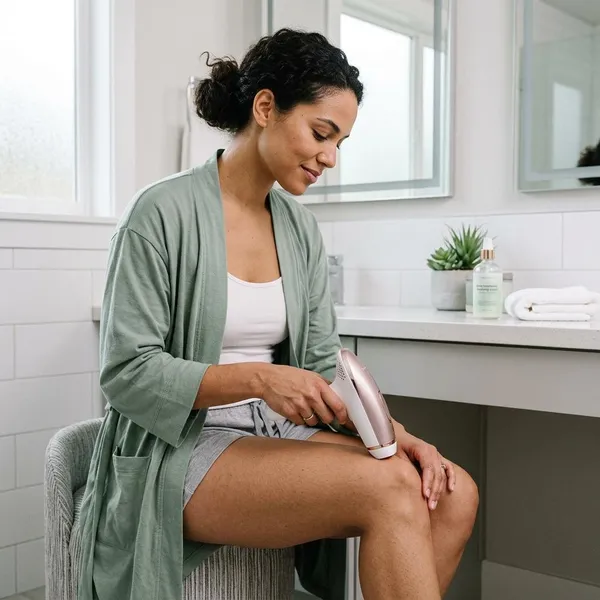
Home treatment makes the most sense when you want lower-maintenance edges, not when you are trying to force a full salon result into a bathroom routine. If your coloring fits, your skin is calm, and the manual approves the exact area, steady conservative sessions are usually the smarter path than chasing maximum power.