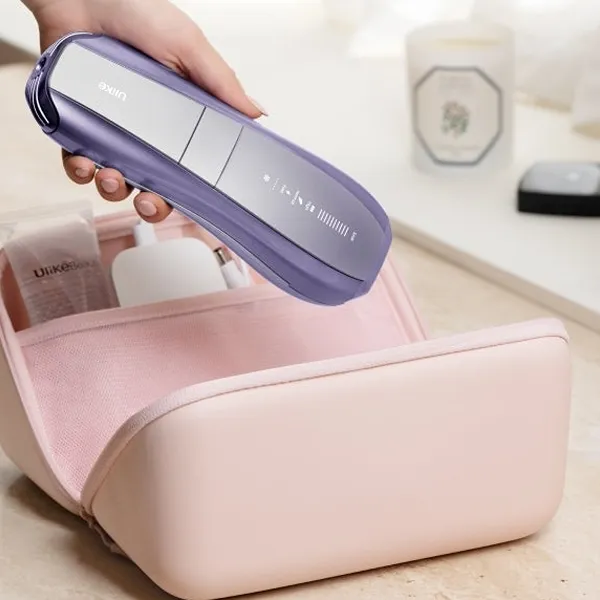
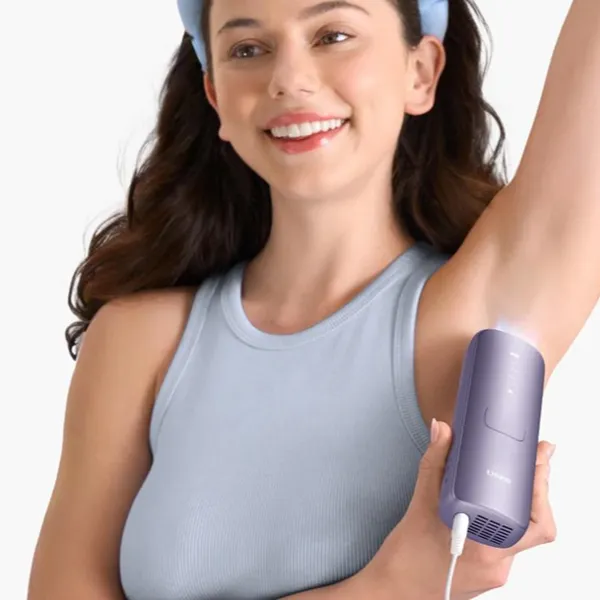
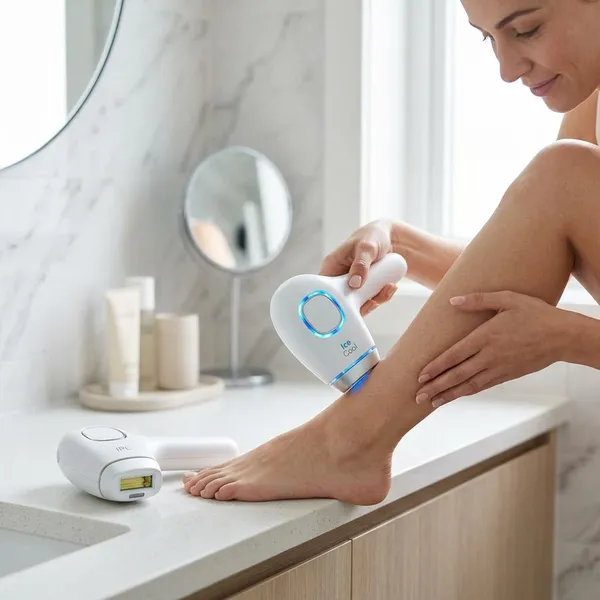
If you are comparing laser hair removal at home vs professional, the simplest split is this: home IPL can be worth it for small, low-risk areas if your skin and hair are a good match, while professional laser is usually better for faster results, darker skin tones, larger areas, or anything you feel unsure about treating yourself.
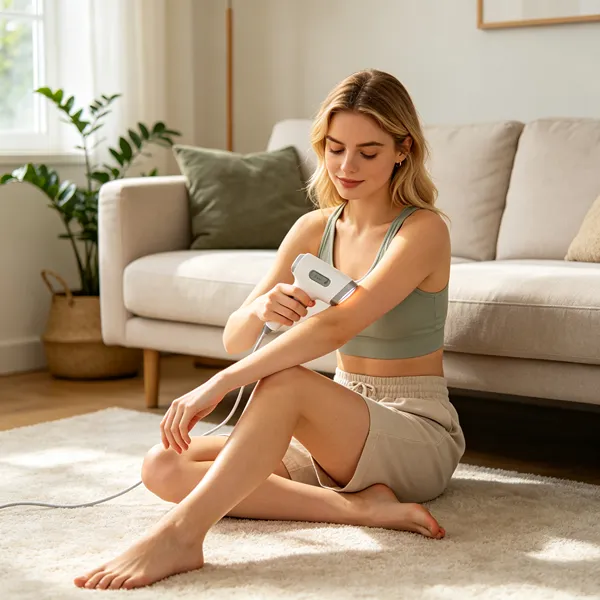
How home IPL and professional laser differ
The first thing to check is not the price tag. It is the type of light being used. Most home devices are IPL, not true laser, and that difference affects how strong the treatment feels, how quickly hair reduces, and how suitable the device is for your skin tone.
IPL uses broad-spectrum light
IPL stands for intense pulsed light. Instead of using one focused laser wavelength, it sends a broader range of light into the skin. It can still target pigment in the hair, but the energy is less concentrated, so progress is usually slower and more dependent on repeated use.
This is why home IPL is most realistic for someone treating underarms, lower legs, or a small bikini-line area and who does not mind keeping a schedule. It is less ideal if you want fast change before a vacation or if you know you will stop using the device after a few sessions.
Professional laser uses focused wavelengths
Professional laser hair removal uses more focused light that can be matched more closely to the treatment area and skin type. Clinics may use different laser technologies depending on the person being treated, the hair thickness, and the level of pigment in the skin.
- Coarse dark hair: often responds better to stronger, targeted treatment.
- Larger areas: clinic equipment can cover them more evenly and efficiently.
- Mixed needs: settings can be adjusted between areas, such as underarms and face.
That does not mean every clinic visit is automatically perfect. The provider's training and the device choice still matter. But professional treatment gives more room for proper adjustment than a fixed home device.
Energy levels affect treatment speed
Energy level is one of the main reasons professional treatment often shows visible reduction sooner. Home IPL devices use lower energy for safety, which is helpful for DIY use but also means you usually need more sessions and more patience.
| Situation | Home IPL may fit | Professional laser may fit better |
|---|---|---|
| Small area | Underarms or a small bikini line if your skin and hair are compatible | If you want faster, more predictable reduction |
| Large area | Possible, but time-consuming with a small treatment window | Better for full legs, chest, back, or dense growth |
| Timeline | Better if gradual change is acceptable | Better if you want clearer progress with scheduled sessions |
Device control affects precision
Home devices keep control simple. That is useful when you are treating an easy-to-see area, but it can be limiting when hair density, skin tone, or sensitivity changes from one spot to another.
Precision also matters for coverage. Treating the backs of thighs or the bikini line at home can lead to missed patches or too much overlap. In a clinic, the area can be mapped and treated more evenly, which matters most when uneven regrowth would bother you.
Which option is safer for your skin
Both options can be safe when they match the person using them, but they are not equally suitable for everyone. The safest choice depends on skin tone, hair color, recent sun exposure, medication or skincare use, tattoos, and whether the treatment area is easy to handle correctly.
Home IPL has fixed safety limits
Home IPL devices are designed with limits because they are meant for non-professional use. Many include skin-tone sensors, contact sensors, or locked intensity levels. These features can reduce obvious mistakes, especially for beginners.
The limit is that a device cannot understand every skin situation. It may not know if your skin is recently tanned, irritated from exfoliation, affected by a strong skincare product, or sitting over a mole or tattoo. A careful user should patch test, avoid recently sun-exposed skin, and follow the device's restricted-area warnings rather than treating it like a normal beauty tool.
Professional laser allows customized settings
Professional laser is often the safer choice when your skin needs judgment, not just a preset. A trained provider can assess the treatment area, choose suitable settings, watch how your skin reacts, and stop or adjust if something looks wrong.
That support is especially useful if you have had pigmentation changes before, use active skincare, have sensitive skin, or feel unsure whether your hair color will respond. Paying for a consultation can be cheaper than buying a device that you later discover you should not use.
Darker skin needs suitable technology
Darker skin tones need more careful matching because hair removal light targets pigment. If too much energy is absorbed near the skin surface, the risk of burns or pigment changes can increase. Many home IPL devices either restrict use on deeper skin tones or block flashes entirely.
- Do not rely on "works for all skin tones" claims alone. Check the device's skin-tone chart or ask the clinic what technology they use.
- Ask about experience with your skin tone. A clinic that regularly treats deeper skin should be able to explain its precautions clearly.
- Be cautious after sun exposure. Recently tanned skin can behave differently, even if your usual skin tone is compatible.
Incorrect use can increase risks
The most common home mistakes are treating too often, skipping the patch test, flashing over tattoos or dark marks, using the device on tanned skin, or assuming mild redness means you can increase the intensity right away.
Who should choose professional laser
Professional laser is not necessary for everyone. If you only want light maintenance on a small area and you are a good match for IPL, a home device can be enough. Professional treatment starts to make more sense when the goal is faster reduction, better coverage, safer customization, or less trial and error.
Users wanting faster reduction
Choose professional laser if speed matters more than privacy or upfront cost. Stronger systems and scheduled sessions usually make the process feel more structured, especially for dense underarm hair, legs, chest, or back.
This matters for someone who wants a long-term routine change rather than casual touch-ups. Home IPL may still reduce growth, but it often asks for more patience than people expect.
Users with difficult treatment areas
The back, backs of thighs, full bikini area, and any place you cannot see clearly are better handled professionally. Missed patches are easy with a handheld device, and over-treating the same strip can irritate the skin.
Users needing expert guidance
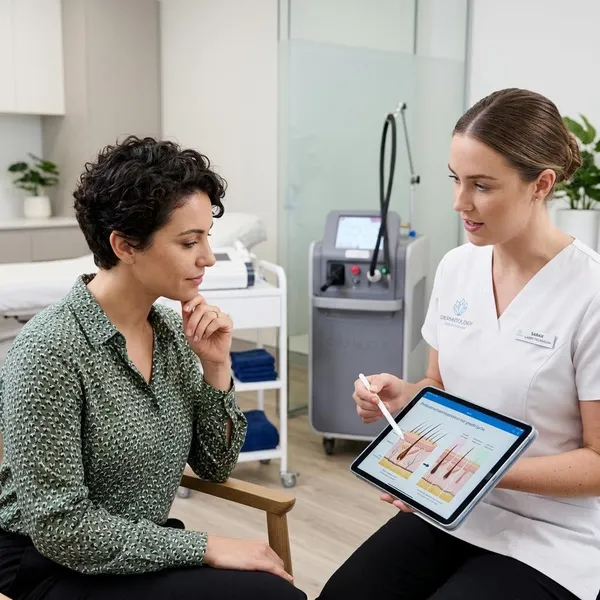
Start with a professional consultation if you have PCOS-related growth, frequent ingrown hairs, very sensitive skin, or hair that is blonde, red, gray, or white. Light-based hair removal works best when there is enough pigment in the hair, and very light hair often responds poorly.
Guidance also helps with timing. Waxing, tanning, certain skincare products, and some medications can affect whether treatment should go ahead. If you are unsure, do not guess based on a product ad.
Users with higher safety concerns
Professional treatment is the more sensible route if you have deeper skin, a history of discoloration, active irritation, recent sun exposure, or you want to treat a sensitive area. These are situations where the cost of a mistake can be higher than the cost of a consultation.
- Choose professional first: darker skin, pigmentation history, large areas, hard-to-see areas, or medical uncertainty.
- Home may be reasonable: small visible areas, strong skin-to-hair contrast, no recent tanning, and patience for repeated sessions.
- Pause and ask before treating: tattoos, moles, irritated skin, eye-adjacent areas, or anything not clearly allowed by the device instructions.
Conclusion
Home IPL is best treated as a gradual, low-risk maintenance option for compatible skin and small areas, not as a direct replacement for clinic laser. If your skin tone, treatment area, or expectations make the choice feel uncertain, professional laser is usually the better place to start because it gives you stronger results, better control, and a safer margin for mistakes.