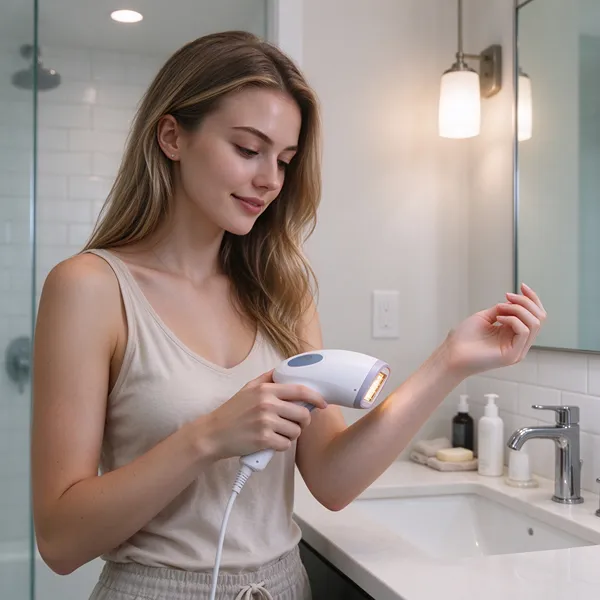
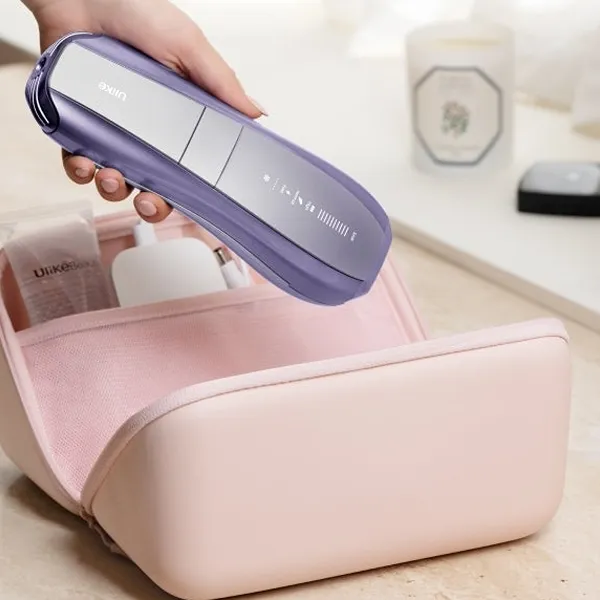
If you are weighing ipl vs laser hair removal, start with one practical rule: laser is usually the stronger clinic option, while IPL is often the more convenient home-friendly option for the right skin and hair match. Both can reduce hair growth, but neither is a magic one-session fix. Your best choice depends first on skin tone, hair pigment, safety, and how much maintenance you are willing to keep up with.
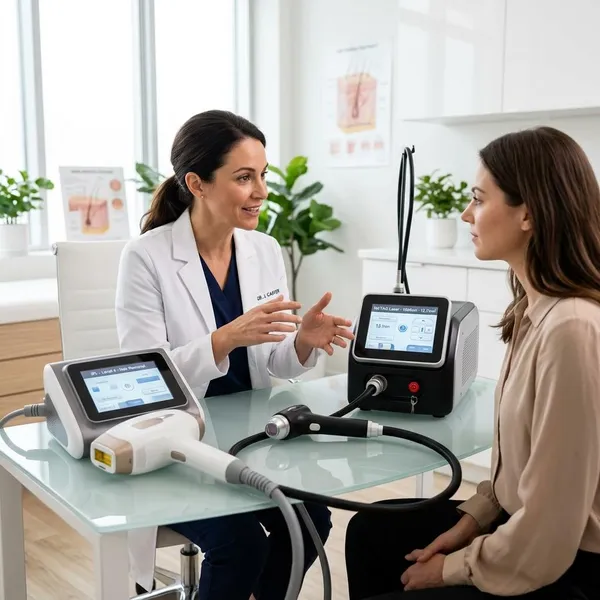
What is the difference between IPL and laser?
IPL and laser both use light energy to heat pigment in the hair follicle, but they do it in different ways. That difference affects how targeted the treatment is, how suitable it may be for different skin tones, and how quickly you may see a useful reduction.
IPL uses filtered, broad-spectrum light
IPL stands for Intense Pulsed Light. Instead of using one narrow beam, it sends out a range of filtered light that is partly absorbed by melanin in the hair. Because the energy is less specific than laser, IPL often needs consistent repeat use to produce visible hair reduction.
This is why IPL is common in home devices. It can be a practical choice if you have light skin, dark hair, and the patience to treat regularly. For example, someone using it on underarms before summer may be happy with slower regrowth and less shaving, while someone wanting fast reduction on coarse facial hair may find it too gradual.
Lasers use specific wavelengths
Laser hair removal uses a specific wavelength chosen to target pigment in the hair more precisely. In a clinic, that focused energy can often treat coarse, dark hair more efficiently than IPL, especially when the device and settings match the person's skin type.
- Alexandrite lasers are often used for lighter skin tones.
- Diode lasers are widely used and can suit many common treatment areas.
- Nd:YAG lasers are often considered for darker skin because they interact differently with surface pigment.
Is laser hair removal more effective than IPL?
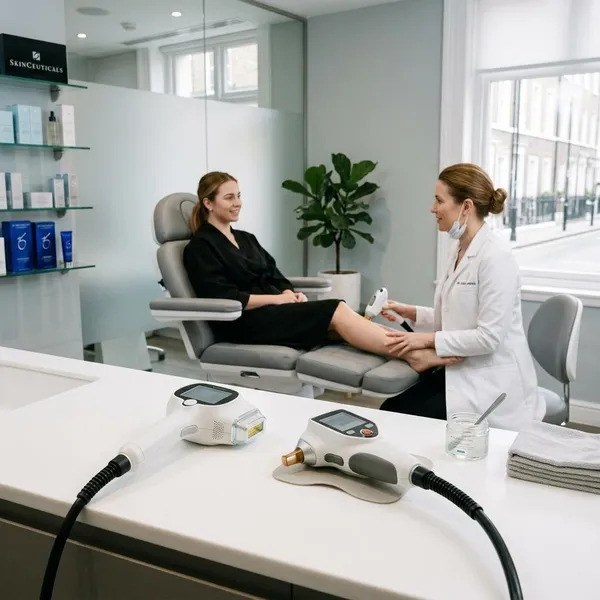
Laser is often more effective than IPL when you are comparing professional clinic treatments, especially for coarse dark hair. But the comparison gets messy when people compare clinic laser with a lower-powered home IPL device. Those are not equal treatment settings.
Both can reduce hair growth
Both methods can reduce hair growth because both aim to heat the follicle enough to weaken future growth. The realistic goal is usually less hair, finer regrowth, slower regrowth, and fewer shaving or waxing sessions—not perfectly bare skin forever.
Hair grows in cycles, so repeated sessions matter. If only a small portion of hairs are in the right growth phase during one treatment, the next sessions catch more of them at a better time.
Some lasers outperform IPL in clinical studies
Some clinical comparisons show stronger reduction from certain lasers than from IPL, particularly when the hair is dark and coarse and the treatment is done professionally. The reason is simple: a focused wavelength can deliver energy more selectively to the follicle.
That can matter if you want a more predictable result before a deadline, such as a holiday, wedding, or swim season. For long-term body hair reduction, clinic laser often gives a clearer path than trying to rely on occasional home treatments.
Still, studies do not mean every laser session is automatically better. Settings, spacing, skin type, and operator skill can change the outcome a lot.
Results vary with devices, settings, and hair type
The same device can give different results on two people because hair color, thickness, hormones, and treatment area all affect response. Coarse underarm hair may respond well, while fine upper-lip hair on the same person may be more stubborn.
Clinic results do not predict home-device results
A clinic laser result should not be used as a promise for a home IPL device. Home devices are usually designed with lower energy for consumer use, which can make them convenient but slower.
If your goal is modest maintenance on a low-risk area, home IPL may be enough. If you have dense growth, darker skin, frequent ingrown hairs, or a strong result in mind, a clinic consultation is usually the more sensible first step.
Which option suits your skin and hair?
The best match depends on contrast. Light-based hair reduction works best when the hair has enough pigment to absorb energy and the surrounding skin has less competing pigment. That is why light skin with dark hair is usually the easiest combination.
Either may suit light skin with dark hair
If you have naturally light skin and dark hair, both IPL and laser may be reasonable options. Home IPL can suit someone who wants gradual reduction on legs or underarms and does not mind repeating sessions at home.
Laser may be worth the extra cost if you want faster progress, have thick bikini-line or underarm hair, or are tired of ingrown hairs. For year-round smoothness rather than a short summer tidy-up, laser often feels less frustrating because the treatment plan is more structured.
Specialist laser treatment offers options for darker skin
Darker skin needs a more careful approach because the skin itself contains more melanin. IPL can be riskier if the device is not suitable or the setting is too aggressive. Some home devices exclude deeper skin tones entirely, so the shade chart is not a small detail.
Specialist laser treatment may offer safer options, particularly when the clinic uses wavelengths and settings chosen for darker skin. Ask for a patch test, ask which laser is being used, and avoid any provider who treats skin tone as an afterthought.
Neither works well on hair with little pigment
White, gray, red, and very light blonde hair usually respond poorly to both IPL and laser because there is not enough pigment for the light to target. Dark blonde hair can be borderline; coarse strands on light skin may respond somewhat, but results are less predictable.
What should you compare before choosing?
Do not choose by technology name alone. Compare the full course, the maintenance, the discomfort, the safety risk, and the total time you are realistically willing to spend.
Treatment course and maintenance needs
Most people need a course of sessions, not a single treatment. Clinic laser often follows scheduled appointments spaced several weeks apart, while home IPL usually starts with more frequent use before moving into maintenance.
| Situation | More practical choice | Why it may fit |
|---|---|---|
| Small area, patient user, lower budget | Home IPL | Convenient and lower upfront cost if you stay consistent |
| Coarse hair, faster result wanted | Clinic laser | Usually stronger and more targeted |
| Darker skin or higher pigmentation risk | Specialist laser consultation | Device choice and settings matter more |
| Very light, gray, red, or white hair | Neither may work well | Too little pigment for reliable targeting |
Discomfort and cooling
Discomfort depends on the area, setting, device, and cooling—not just whether it is IPL or laser. Upper lip, bikini line, ankles, and areas with dense hair often feel sharper than lower legs or arms.
Clinic lasers can feel more intense because they may use higher energy, but professional cooling can make a big difference. Home IPL is often gentler per flash, although larger areas can become tedious because you are doing the work yourself.
Burn and pigmentation risks
Both IPL and laser can cause redness, irritation, burns, or pigmentation changes if the skin is not suitable for the setting used. The risk rises with recent tanning, sunburn, self-tanner, wrong device choice, or treating over irritated skin.
Postpone treatment if your skin is freshly tanned or sunburned. That is not just a cautious rule; extra pigment in the skin can absorb more light and make the treatment less predictable. If you are unsure, a patch test is a better decision than guessing.
Total cost and time commitment
Home IPL usually costs less upfront than a course of clinic laser, but the time cost is easy to underestimate. You have to shave first, treat regularly, track intervals, and keep doing top-ups if regrowth returns.
Clinic laser costs more per visit, but it may save time if you want stronger reduction with less hands-on effort. For occasional summer maintenance, IPL may be enough. For long-term reduction on thick hair or several body areas, paying more for a professional plan can be the less annoying option.
- Do not compare one device price with one clinic session. Compare the full course and likely maintenance.
- Do not treat over a tan to stay on schedule. Waiting is safer than pushing through.
- Do not judge after one session. Early shedding or patchiness does not show the final result.
- Do not ignore shade charts. They are safety guidance, not decoration.

Conclusion
Choose IPL if your skin and hair are a good match, your goal is gradual reduction, and you will actually keep up with home sessions. Choose clinic laser if you want stronger, more predictable reduction, have coarse hair, darker skin, or less patience for maintenance. If there is any doubt about skin tone, tanning, medication, or hair color, a patch test or professional assessment is the safer first move.