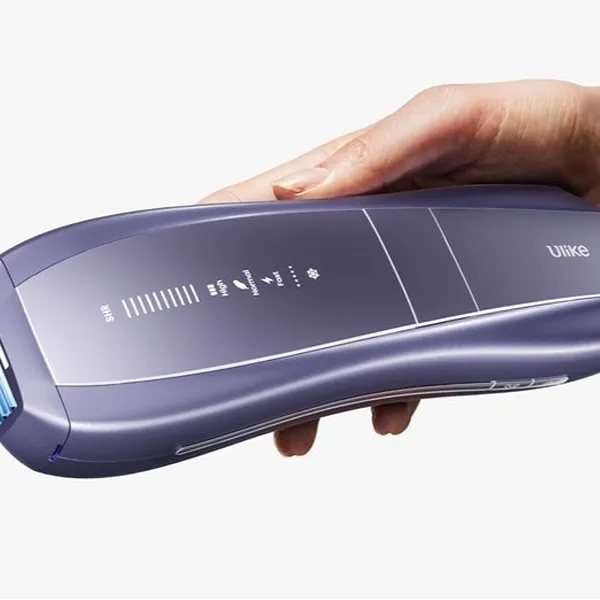
The ipl hair removal wavelength range matters because IPL is not one neat beam of light. Most hair-removal IPL devices use a broad band of light, often somewhere around 500nm to 1100nm or 1200nm, but filters decide which part of that light actually reaches your skin. Before comparing devices by the biggest or most technical-looking number, check three things first: your skin tone, your hair color, and what the listed wavelength number really describes.
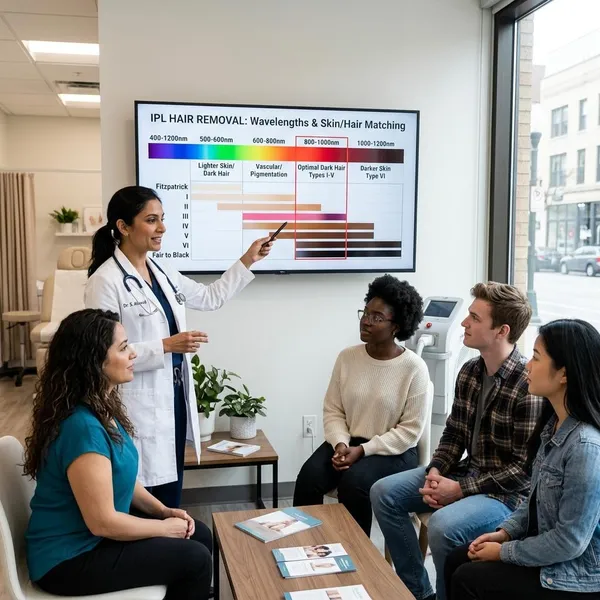
How IPL wavelengths work
IPL, or intense pulsed light, uses a flash of multiple wavelengths rather than a single laser wavelength. That wide output is why IPL can cover larger areas quickly, but it also makes the specifications less obvious than they look on a product page.
Light targets melanin in the hair
Hair-removal IPL works by sending light into the skin so melanin in the hair absorbs the energy and turns it into heat. The aim is to heat the hair structure enough to weaken future growth while avoiding too much heat in the surrounding skin.
This is why contrast matters so much. Dark hair on lighter skin is usually the easiest match because the hair absorbs more of the light than the skin does. If the hair is blonde, red, gray, or white, there may not be enough pigment for IPL to target well, no matter how impressive the wavelength range sounds.
Filters control the usable light range
A filter shapes the flash by blocking part of the spectrum. When a device lists something like a 590nm filter, that usually means shorter wavelengths below that point are reduced or blocked while longer wavelengths are allowed through.
- Lower cut-on filters: allow more shorter-wavelength light, which can be more active around pigment.
- Higher cut-on filters: remove more short wavelengths, which may be safer for skin with more visible pigment.
- Broad output ranges: describe the lamp or system range, not necessarily equal energy at every wavelength.
Different wavelengths affect light absorption
Shorter wavelengths tend to be absorbed more strongly by melanin near the surface of the skin. Longer wavelengths generally travel deeper and are less concentrated in the upper skin layers. For hair removal, the useful balance is not "shorter is stronger" or "longer is better"; it is whether enough heat reaches the follicle without over-heating the skin.
For a low-risk scenario, such as fair skin with coarse dark leg hair, IPL usually has a clearer target. For a higher-risk scenario, such as recently tanned skin or a deeper skin tone, the same intensity and wavelength range can be less forgiving. That is when device restrictions, patch testing, and manufacturer skin-tone guidance matter more than the headline wavelength number.
Why IPL devices have different wavelength numbers
Different IPL devices show different wavelength numbers because brands are not always describing the same part of the system. One number may describe a filter, another may describe the lamp's possible output, and another may be a simplified marketing claim.
Filter cut-on wavelengths change the output range
A 510nm filter and a 590nm filter can both be used in hair-removal IPL, but they do not shape the pulse in the same way. The lower cut-on filter lets more shorter wavelengths through; the higher cut-on filter removes more of them.
That difference can affect comfort and safety. More short-wavelength light may be suitable for some lighter skin and dark-hair combinations, while a higher cut-on point may be used to reduce surface pigment heating. The number only becomes useful when you know whether it is a filter threshold, not just a decorative specification.
At-home and professional IPL use different specifications
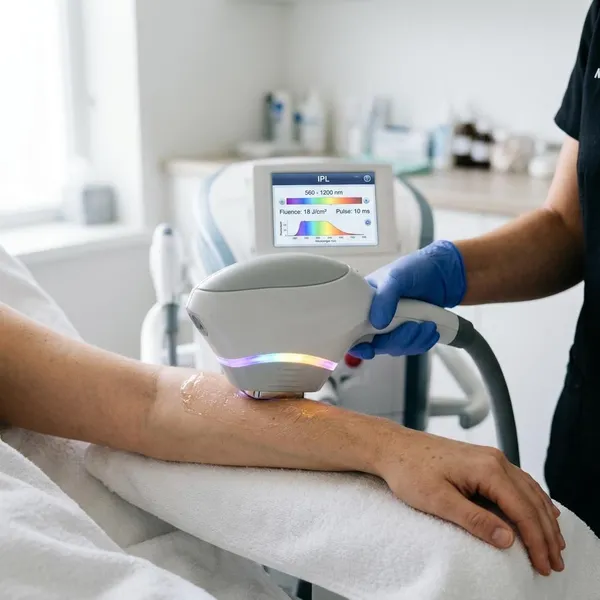
Home IPL devices are usually built around simplicity: lower energy, fixed or automatic settings, contact sensors, and skin-tone checks. Professional IPL systems may allow stronger output, different filters, pulse adjustments, and trained operator control.
That makes direct comparison tricky. A clinic system listing several filter options is not the same as a home device listing one broad spectrum. If you want occasional home maintenance on suitable dark hair, a consumer device may be enough. If you have a deeper skin tone, a history of pigmentation issues, or want stronger treatment on stubborn coarse hair, professional assessment is the safer comparison point.
Product numbers do not always show the full treatment range
Product pages often make wavelength numbers look more complete than they are. Before buying, treat the number as one clue and check it against the rest of the device information.
- Find out what the number means. Is it a broad output range, a cut-on filter, or a single highlighted value?
- Check the skin-tone chart. Avoid devices that make vague claims without clear exclusions.
- Match your hair color first. Dark brown or black hair is more promising than blonde, red, gray, or white hair.
- Look for safety controls. Skin sensors, contact sensors, and automatic intensity limits matter in real use.
- Read the treatment schedule. Serious brands explain repeat sessions and maintenance instead of promising instant removal.
Which IPL wavelengths work best for different users
The best IPL range depends less on one perfect wavelength and more on the gap between hair pigment and skin pigment. The stronger the contrast, the easier it is for IPL to heat the hair rather than the skin.
Dark hair absorbs IPL energy better
Black and dark brown hair usually respond best because they contain more melanin. Coarse dark hair on areas such as the underarms, lower legs, or bikini line often gives a clearer response than fine or pale hair.
Even with a good match, IPL is gradual. Hairs are not all in the same growth phase at the same time, so repeated sessions are needed. A practical expectation is reduction over a treatment course, not permanently bare skin after one or two flashes.
Light hair responds less effectively
Light hair is the weak point for IPL. Blonde, red, gray, and white hair often do not absorb enough light to heat the follicle reliably. Medium brown hair sits in the middle: coarse medium-brown hair on fair skin may respond, while fine light-brown hair can be disappointing.
Darker skin needs more careful wavelength selection
Darker skin contains more melanin in the epidermis, so there is less room for error. IPL that is suitable for lighter skin may cause excess heat, burns, or pigmentation changes if used outside the device's approved skin-tone range.
- Do not treat freshly tanned skin. Extra pigment increases the chance of irritation.
- Patch test first. Wait as instructed by the device manual before treating a larger area.
- Use the skin-tone sensor properly. Do not try to bypass safety stops.
- Consider professional laser advice. Deeper skin tones may need a more controlled wavelength and trained supervision.
Is IPL the right choice for you
IPL is a good fit when your skin and hair give the light a clear target and you are willing to treat consistently. It is less suitable when the hair lacks pigment, the skin tone is outside the device's range, or you need highly controlled treatment for safety reasons.
Choose IPL for suitable skin and hair
Choose IPL if you have lighter skin, naturally dark hair, and want a convenient way to manage regrowth at home. It is especially practical for larger areas where repeated shaving feels annoying, such as legs or arms.
For summer-only use, start well before you want results and avoid treating skin that has recently tanned. For year-round maintenance, the better habit is consistency: follow the schedule, stay within the safe intensity range, and use touch-ups only as needed rather than over-treating.
Consider laser for specific treatment needs
Laser hair removal uses a single focused wavelength instead of IPL's broad spectrum. Diode lasers around 800–810nm are commonly used for hair removal, while 1064nm Nd:YAG systems are often considered in professional settings for deeper skin tones because they interact less with surface melanin than shorter wavelengths.
That does not make laser automatically better for everyone. It can cost more and usually means clinic visits, but it may be the better route for stubborn coarse hair, more complex skin-tone concerns, or anyone who wants a trained operator making the settings decision.
Match technology to your goals
The most useful choice is based on what you need the treatment to do, not which device has the most impressive number. Use this quick split before buying:
| Situation | Better direction |
|---|---|
| Light skin with dark hair, large areas, home routine | IPL is usually a practical option |
| Light or gray hair | IPL is often weak; consider other methods |
| Recently tanned or highly reactive skin | Wait, patch test, or avoid home treatment |
| Deeper skin tone or pigmentation concerns | Professional guidance is safer than guessing from wavelength claims |
| Stubborn coarse hair and higher budget | Laser may offer more focused treatment |
Conclusion
The wavelength number is useful only when it is read with the filter, skin-tone guidance, hair-color match, and safety controls. If you have dark hair and skin that falls clearly within a device's approved range, IPL can be a sensible home option; if your hair is light, your skin is deeper in tone, or you are recently tanned, the safer answer may be to pause, choose another method, or get professional advice before treating.