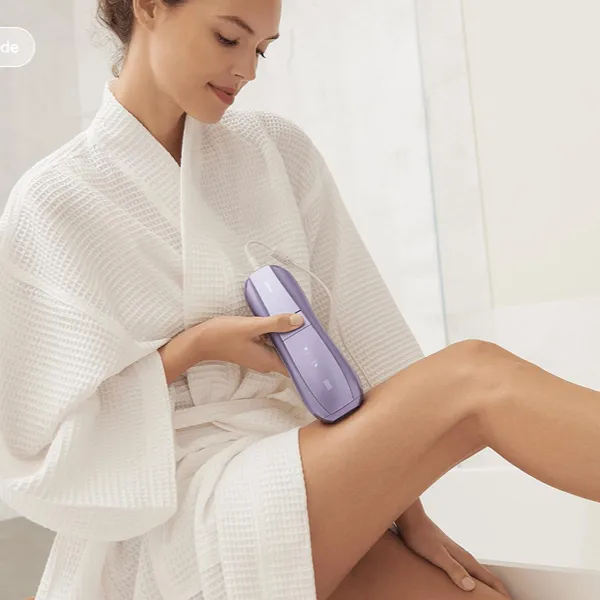
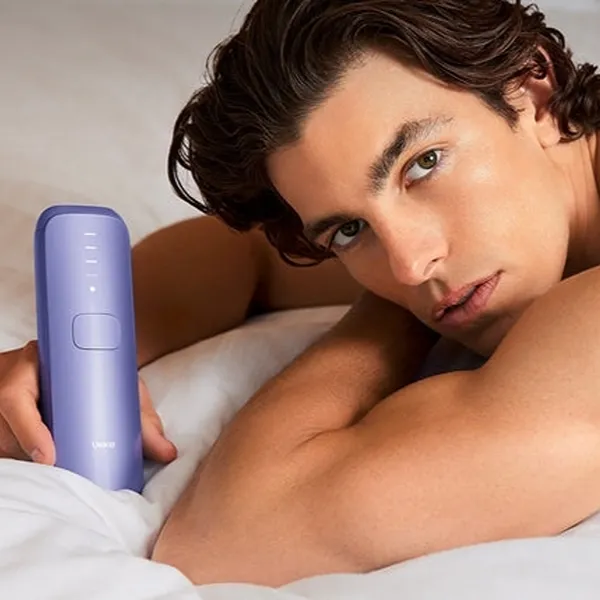
You can use Ulike Air 10 on some facial hair, but keep it to suitable areas below the cheekbones and start more cautiously than you would on your body. Shave first, treat clean dry skin, patch test, wear eye protection, and avoid anything close to the eyes. If your skin is irritated, recently tanned, or reacting to skincare, wait rather than trying to push through a session.
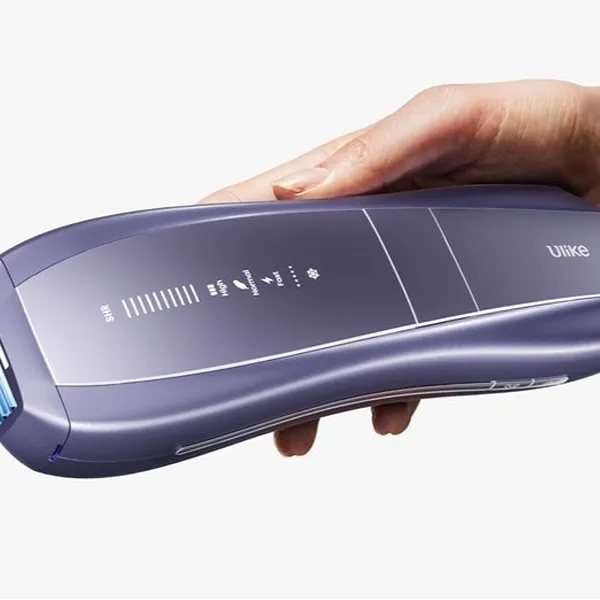
Which facial areas can you treat with Ulike Air 10
The safest facial zones are the small, hair-bearing areas below the cheekbones: usually the upper lip, chin, jawline, and sometimes the lower cheek area near the jaw. The first check is simple: can the device sit flat, and is the flash clearly away from the eye area? If either answer is no, skip that spot.
Upper lip hair
The upper lip is a common area to treat because it is small and often has visible darker hairs. Use a low setting at first, work from one side to the other, and avoid flashing too close to the nostrils or lip edge where the skin can feel sharper.
Chin and jawline hair
Chin and jawline hairs are often coarser, so they may be better targets for IPL but slower to calm down. Treat these areas in small sections and reposition the device around curves instead of forcing the head to sit at an awkward angle.
- Start low if this is your first facial session.
- Increase only after your skin stays calm.
- Do not repeatedly flash stubborn spots in one session.
Areas below the cheekbones
Lower cheek areas may be suitable if the hair is clearly below the cheekbone and the device can make full contact. A useful boundary is to stay closer to the jawline than the eye socket; if you find yourself angling the device upward toward the eye area, the treatment zone is too high.
Areas to avoid near the eyes
Do not use Ulike Air 10 on eyelids, eyebrows, the brow bone, the eye socket, or any area where the flash feels difficult to control near your vision. Also avoid tattoos, dark moles, cuts, cold sores, active acne lesions, sunburn, irritated skin, and recently tanned areas.
Before using Ulike Air 10 on your face
Preparation matters more on the face because redness, dryness, or uneven tone is harder to hide than it would be on the body. Keep the routine boring: remove the hair at skin level, cleanse well, dry fully, patch test, and check whether your skin or hair is suitable that day.
Shave instead of waxing or plucking
Shave before treatment, but do not wax, pluck, thread, or epilate the area first. IPL needs pigment in the hair root to target, so removing the root makes the session less useful.
Clean and dry your skin
Use Ulike Air 10 on bare, dry skin. Remove makeup, sunscreen, moisturizer, facial oil, and active serums so nothing sits between the treatment window and your skin.
After cleansing, wait a few minutes if your face still feels damp or warm. Good lighting also helps you spot moles, blemishes, or irritated patches you should work around.
Complete a patch test
Patch test a small area before doing a full facial session, even if you already use IPL on your legs or arms. Facial skin can react differently, especially on the upper lip.
- Choose a discreet spot in the area you plan to treat.
- Use the lowest comfortable setting.
- Wait several hours, ideally until the next day.
- Stop if you notice burning, swelling, or redness that lingers.
Check facial treatment restrictions
Check the device instructions for skin tone, hair color, medical, medication, and facial-use restrictions before treating. Home IPL usually works best on darker hair and may do little for white, gray, red, very light blonde, or extremely fine facial hair.
Be more cautious if you use prescription skincare, strong retinoids, peeling acids, or products that make your skin light-sensitive. If you have melasma, a chronic skin condition, pregnancy-related concerns, or a history of pigmentation marks after irritation, ask a dermatologist before using IPL on your face.
How to use Ulike Air 10 on your face
Once your skin is prepared, treat the face slowly and deliberately. Pick one small zone, use a comfortable setting, keep the device flat, flash in an organized pattern, and stop if the sensation feels more than brief warmth or a quick snap.
Turn on the device and cooling system
Turn on the device and allow the cooling function to activate before you start flashing. Put on protective glasses first, and use the device in a well-lit room so the flashes feel less intense and you can see the treatment area clearly.
Choose a comfortable intensity
For a first facial session, choose a low or moderate level rather than the strongest setting you can tolerate. The upper lip may need a gentler level than the chin, so it is fine to use different intensities on different facial zones.
Place the device flat on skin
Hold the treatment window flat against the skin, close to a 90-degree angle. Full contact helps the flash distribute evenly and makes it easier to avoid missed strips or uneven overlap.
Flash small areas carefully
Work one flash at a time in a simple pattern. On the upper lip, move left to right or right to left; on the jawline, follow the line in short sections. Do not keep flashing the exact same spot because the hair looks stubborn.
Clean the device after treatment
After the device is off and cool, wipe the treatment window using the cleaning method recommended by the manufacturer. This removes facial oil, product residue, and tiny hairs that could affect contact next time.
Do not use abrasive cloths or harsh cleaners on the window. If it looks cloudy or scratched, deal with that before your next session rather than continuing on facial skin.
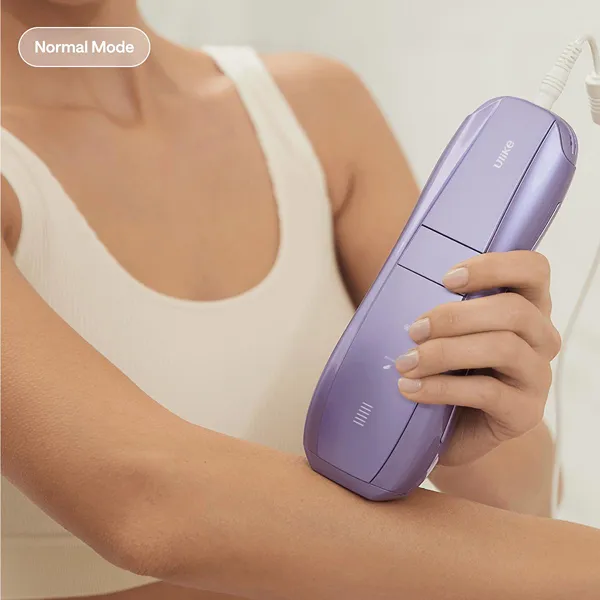
Which Ulike Air 10 mode is best for facial hair
The best mode depends on the area, hair thickness, and your skin's reaction. For the face, comfort and repeatability matter more than using the highest power. A lower setting used consistently is usually more useful than a strong session that leaves your skin too irritated to continue.
Normal mode for first facial sessions
Normal mode is usually the sensible starting point for facial hair because it lets you learn placement, contact, and skin response without jumping straight into a stronger mode. Use it for your first few sessions unless the device instructions tell you otherwise for your skin type.
Higher settings for thicker hair
Higher settings may be worth considering for thicker chin or jawline hair after your skin has handled lower levels well. Test the higher level on a small patch first, especially if the hair is coarse but the surrounding skin is easily irritated.
For someone treating a few coarse chin hairs long-term, a gradual increase can make sense. For someone treating the upper lip before a social event, staying conservative is usually the better choice.
SHR mode for stubborn hair after testing
SHR mode may be an option for stubborn facial hair only after patch testing and only if your skin tolerates it. It is not the best first move for sensitive areas such as the upper lip.
Lower settings for sensitive skin
Lower settings are often best if your face reacts easily to shaving, weather changes, retinoids, or exfoliating products. Plan treatment on a low-irritation day: no fresh sunburn, no peeling skincare, no angry breakouts, and no tight or stinging skin.
What results can you expect from facial IPL
Facial IPL usually gives gradual reduction, not instant removal. Hair grows in cycles, so some hairs respond earlier while others need repeated sessions. The most realistic early signs are slower regrowth and hair that looks finer or less dense.
Slower facial hair regrowth
After consistent sessions, you may notice that upper-lip or chin hair takes longer to come back after shaving. This can be a useful result even before the area looks dramatically clearer, because daily touch-ups may become less necessary.
If your facial hair is strongly hormonal, progress can be slower and maintenance may still be needed. In that situation, judge success by easier management, not by expecting every hair to disappear permanently.
Finer-looking hair over time
Regrowth may become softer, thinner, or less obvious in bright light. This tends to matter most on the chin and jawline, where coarse hairs can feel noticeable even when there are only a few of them.
Take progress photos in the same lighting if you tend to over-check the mirror. Day-to-day changes can be subtle, but a calmer shave routine and less visible stubble are signs the treatment may be helping.
Facial aftercare after Ulike Air 10
Aftercare should keep the skin calm, protected, and free from unnecessary irritation. The face is exposed to sun, heat, makeup, and skincare every day, so the safest post-IPL routine is simple for at least the short recovery window.
Moisturize treated skin
Apply a gentle, fragrance-free moisturizer or plain aloe vera gel if your skin feels warm or tight. Use something your skin already tolerates; right after IPL is not the time to test a new active cream.
Avoid sun exposure
Avoid strong direct sun after facial IPL, especially if the treated area looks red or feels warm. If you are treating in summer or during a sunny trip, schedule sessions for a time when you can stay shaded and avoid unnecessary heat afterward.
Use sunscreen during the day
Use broad-spectrum sunscreen during the day while you are doing facial IPL, and be especially careful after treatment. SPF 30 or higher is a common practical choice, but the key is applying enough and reapplying when you are outdoors for longer periods.
Avoid irritating skincare products
Pause products that often sting or exfoliate, such as retinoids, strong acids, scrubs, peeling treatments, and heavily fragranced formulas. A safe post-treatment routine is gentle cleanser, plain moisturizer, and sunscreen.
If your skin feels normal the next day, you can bring regular products back gradually. If it still stings, keep the routine minimal until it settles.
Conclusion
Using Ulike Air 10 on the face is mainly about choosing the right areas and refusing to rush: stay below the cheekbones, avoid the eyes, shave instead of plucking, patch test, and keep the setting comfortable. If your skin is calm and the hair is dark enough to target, facial IPL can become a manageable routine; if the area is irritated, too close to the eyes, or mostly fine peach fuzz, another hair-removal method may be the wiser choice.