FDA clearance and CE marking can be useful safety signals for a home IPL device, but neither one means "safe for everyone." The safer way to judge a device is to match the exact model to the right record or documentation, then check whether your skin tone, hair color, treatment area, and routine fit the manual.
What does FDA clearance mean for home IPL?
For a home IPL device sold in the United States, FDA clearance usually refers to the 510(k) pathway. It is a meaningful checkpoint because the device has been reviewed for a specific intended use, but it should not be treated as a blanket promise that the device cannot cause burns, irritation, or pigment changes.
510(k) clearance is based on substantial equivalence
A 510(k) clearance generally means the manufacturer showed that the device is substantially equivalent to a legally marketed predicate device. In plain terms, the FDA is looking at whether the new device is similar enough in intended use, technology, and safety profile to a device already allowed on the market.
That still leaves room for model-level differences. One IPL device may have a skin-tone sensor, cooling feature, or different intensity range, while another cleared device may not. If you are comparing two models, do not assume the same settings, body areas, or treatment schedule apply just because both mention FDA clearance.
FDA-cleared is not the same as FDA-approved
This is one of the easiest marketing claims to misunderstand. Many home IPL devices are described as FDA-cleared through 510(k), not FDA-approved. If a seller uses "approved" loosely, check the actual record before trusting the wording.
- FDA-cleared: usually tied to a 510(k) record for a specific device and intended use.
- FDA-approved: a different type of FDA pathway and not the usual wording for many home IPL devices.
- FDA-registered: often refers to a company or device listing, not proof that the device itself was cleared.
What does CE marking mean for home IPL?
CE marking belongs to the European regulatory system. For a home IPL device, it indicates that the product is being presented as conforming to applicable EU requirements, such as relevant safety, labeling, and product compliance rules.
For a buyer, the CE logo alone is not enough. The claim should connect to a real manufacturer, an exact model, and documentation that matches the version being sold in your region.
It shows claimed conformity with applicable EU rules
CE marking shows claimed conformity with the EU rules that apply to that product. It does not tell you, by itself, whether the device is suitable for your skin tone, safe over a particular body area, or appropriate after recent tanning.
The manufacturer is responsible for CE compliance
With CE marking, much of the responsibility sits with the manufacturer: choosing the correct conformity route, preparing documentation, labeling the product properly, and keeping records where required. Depending on the rules and device category, a notified body may or may not be involved.
FDA clearance vs CE marking
FDA clearance and CE marking are often shown side by side in product listings, but they do not mean the same thing. They come from different systems, use different processes, and require different evidence when you want to verify a claim.
They apply under different regulatory systems
FDA clearance applies to the U.S. market. CE marking applies to the European market. A device may have one, both, or neither, depending on where it is sold and which version is being shipped.
This matters on international marketplaces. A listing may borrow compliance wording from a brand's U.S. page while selling an EU or other regional version, or the other way around. If you are buying for long-term use at home, it is worth checking the market version before purchase. If you only borrowed a device from someone, check the label and manual before using it, not just the brand's current website.
They use different conformity processes
FDA 510(k) clearance involves a submission to the FDA and a substantial-equivalence review. CE marking generally involves the manufacturer demonstrating conformity with applicable EU requirements and keeping the relevant technical documentation.
| Claim on the device | Most useful thing to verify | Common mistake |
|---|---|---|
| FDA-cleared | 510(k) number, device name, manufacturer, intended use | Treating FDA registration as if it were clearance |
| CE-marked | Manufacturer identity, model label, EU-facing documentation | Assuming the logo alone proves suitability for your skin |
They require different records to verify
For an FDA claim, search for a 510(k) number or use the manufacturer and device name in the FDA database. For a CE claim, check whether the manufacturer, model, manual, labeling, and EU compliance information line up.
How to verify Ulike IPL safety claims
For Ulike IPL devices, do not verify the brand in a general way. Verify the specific model. A brand may sell several versions across regions, and a claim that is accurate for one device may not automatically apply to another.
Match the Ulike model to an FDA 510(k) record
If a Ulike model is marketed as FDA-cleared in the U.S., look for the 510(k) number on the official product page, manual, packaging, or support materials. Then compare it with the FDA 510(k) database entry.
Check region-specific compliance information
A Ulike device sold for the U.S. market and one sold for the EU market may be supported by different compliance claims, manuals, plugs, labels, or packaging. The device may look similar in photos, but the paperwork should match the region where you are buying and using it.
Confirm the model name on the device and manual
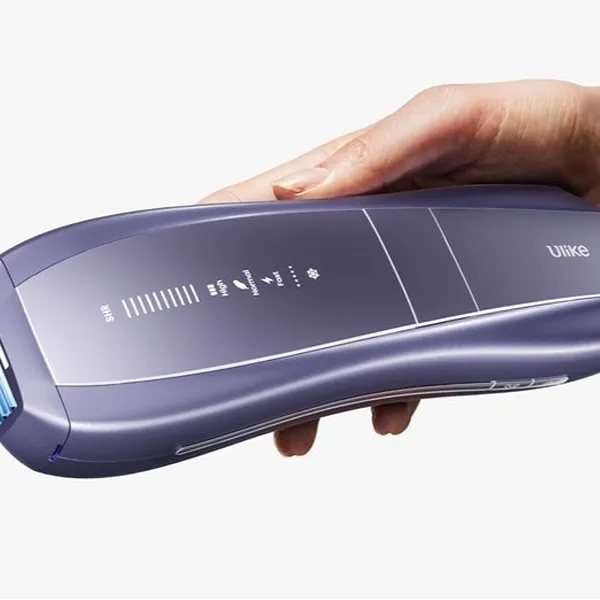
Before first use, compare the model name on the device label, box, manual, and order page. Marketing names can be broad; the technical model identifier is usually more useful for matching safety instructions and compliance claims.
Follow the safety limits for that exact model
Use the manual for the model in your hand, not a routine from a review video or a different Ulike version. Pay special attention to excluded skin tones, recent tanning, tattoos, moles, scars, treatment intervals, facial-area rules, and eye-safety instructions.
How to use a home IPL device more safely
Once the compliance claim checks out, safe use comes down to your skin, the treatment area, and whether you follow the device limits. A cleared or CE-marked IPL device can still be the wrong choice for a specific person, skin condition, or day.
Check compatibility before treatment
Start with the manual's skin-tone chart, hair-color guidance, treatment-area rules, and contraindications. Home IPL targets pigment, so poor skin-and-hair contrast can affect both safety and results.
- Do not treat over tattoos, dark moles, open wounds, or irritated skin.
- Be more cautious after sun exposure, strong exfoliation, or active skincare.
- Ask a professional first if you have a history of pigmentation problems or use photosensitizing medication.
Someone with light skin and dark hair on the lower legs may be in a straightforward use case. Someone with recent tanning, melasma, or sensitive facial skin is in a higher-risk situation and should be much more cautious.
Patch test before full use
Patch test a small area using the manual's instructions, then wait the stated time before treating a larger area. This is not just a beginner step; it is also useful after sun exposure, a skincare change, or a long break from IPL.
It is far better to find out that your skin is reactive on a small patch than after treating both legs, underarms, or bikini line.
Shave and clean the treatment area
Shave the area first and use the device on clean, dry skin unless the manual says otherwise. Surface hair, lotion, deodorant, or oil can interfere with contact and may make the treatment feel hotter or less predictable.
Do not wax or pluck beforehand if the manual tells you not to. IPL usually needs the hair structure below the skin to remain present so the light has something to target.
Use the recommended intensity
Choose the intensity recommended for your skin tone and treatment area. Starting at the strongest level is not a shortcut; it is one of the more common ways people make home IPL unnecessarily uncomfortable.
A cautious approach makes the most sense for first-time users, sensitive areas, and year-round use where sun exposure changes through the seasons. Lower legs may tolerate a setting that would be too aggressive for underarms or the bikini area.
Stop if your skin reacts badly
Stop treatment if you feel severe pain or notice blistering, marked swelling, unusual darkening, or redness that is intense or lasts longer than the manual says to expect. Mild warmth or temporary redness can happen, but worsening symptoms are not something to push through.
Conclusion
FDA clearance and CE marking are worth checking, but the real safety decision is model-specific and personal. Verify the claim, make sure the manual matches the device you received, and only use IPL when your skin, hair, treatment area, and recent routine fit the stated limits; if any of those pieces are unclear, waiting and checking is the safer choice.